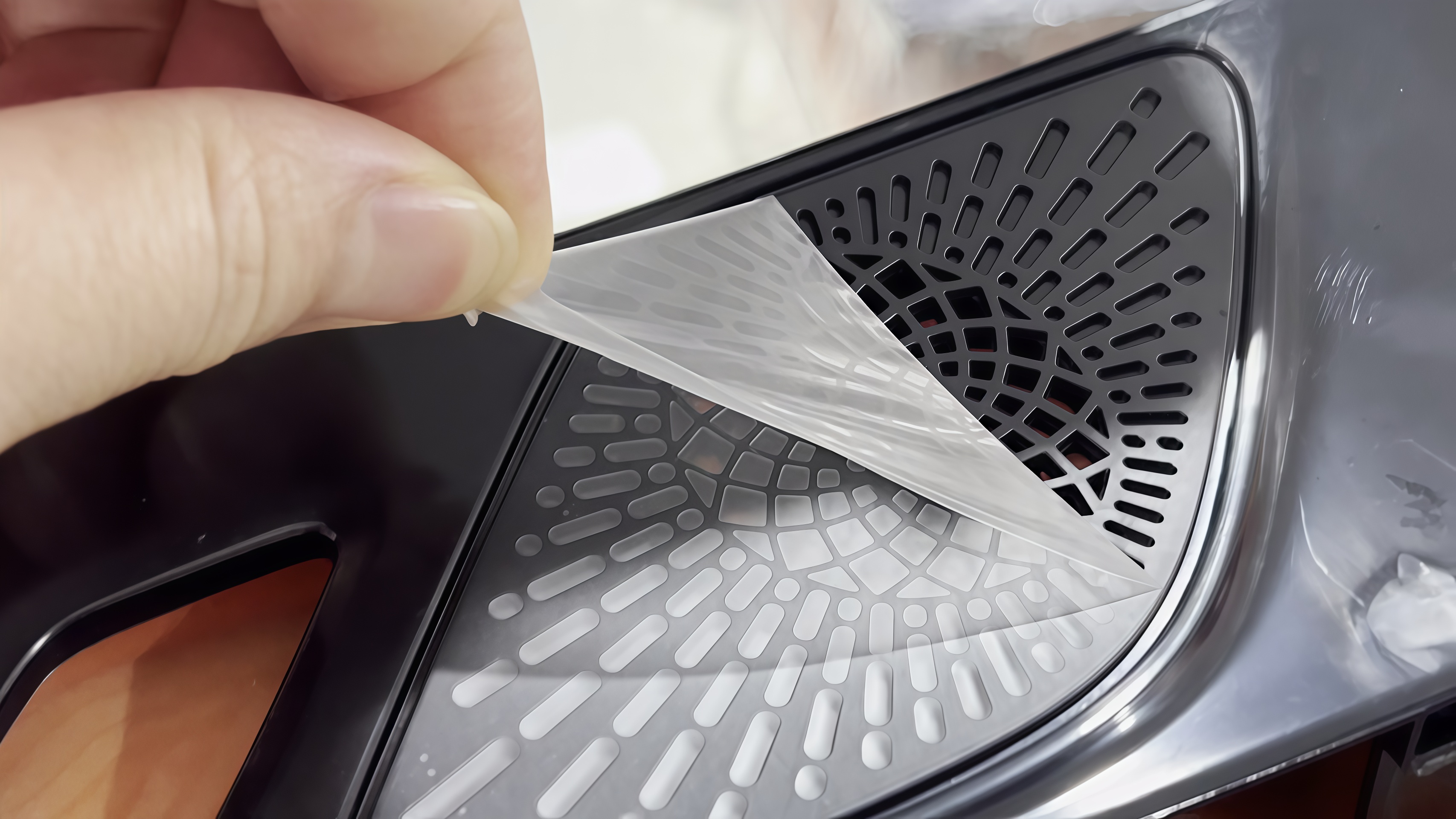
Rearview Mirror Film Laminating Machine for Curved Housings
A new mirror housing release reaches its first full inspection and the film application step is what fails. The housing is a three-dimensional curved surface with draft angles. When the press head of a general flat machine comes down, pressure concentrates on the high point of the curve and air stays sealed under the film on both low sides. Bubbles cluster along the housing edge.
Hand application spreads the film flat, but the film edge drifts two or three millimeters from part to part, so the same housing looks different across the batch.
The housing is a painted or piano black face, and the customer inspects it under raking light. Bubbles, wrinkles and fingerprints all show. A rearview mirror ships as an assembly, so one rejected housing pulls back the whole assembly, and rework backs up from the film station all the way into final assembly.
|
CORE POINT
General flat equipment cannot laminate a rearview mirror housing because a flat press path cannot follow a 3D curve.
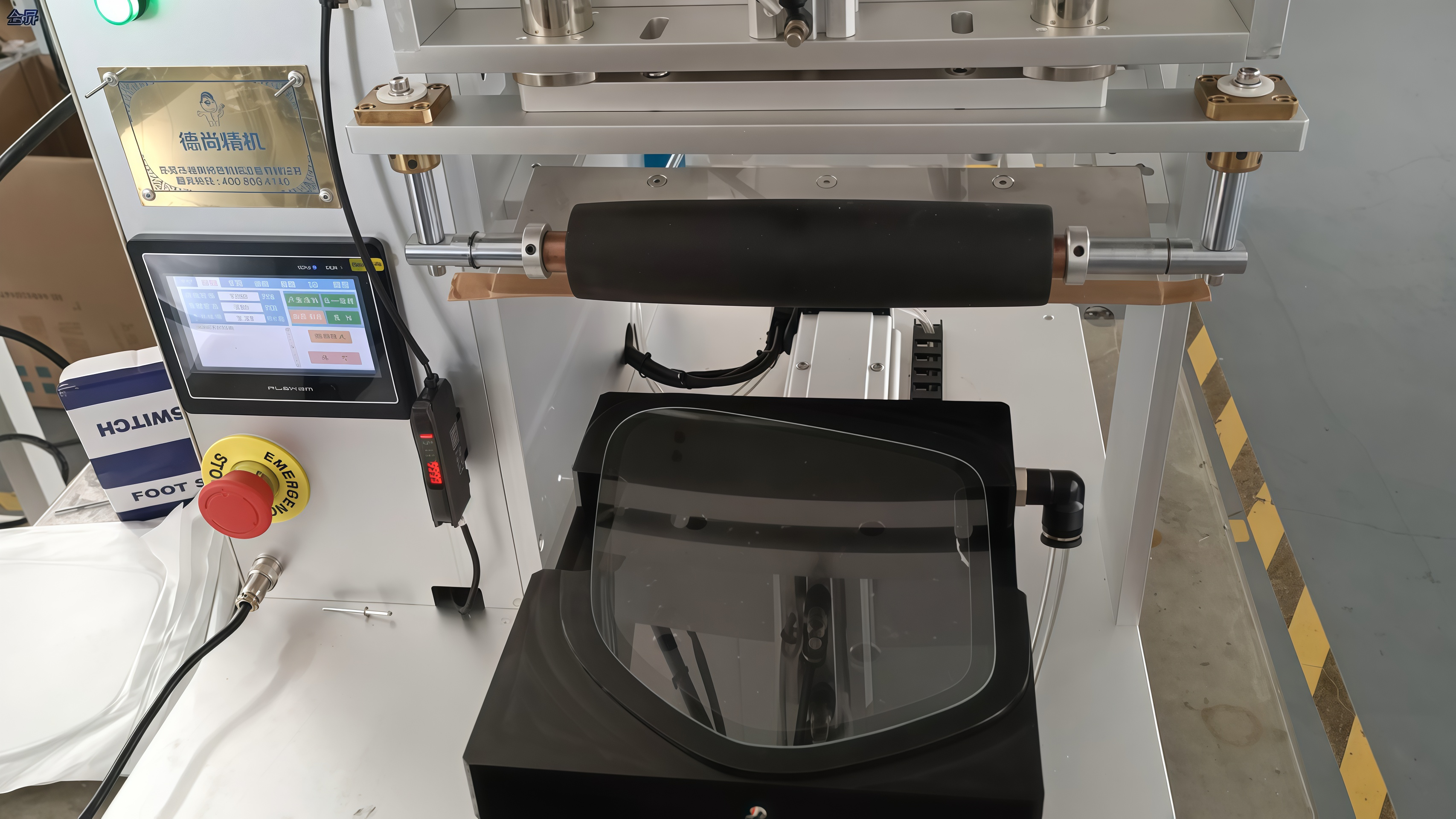
A rearview mirror film laminating machine solves it with roll application: film starts at one end of the curve and a roller presses it down section by section, pushing air ahead of the bond line.
Whether the roller follows your housing radius, and whether the film width window is wide enough, is confirmed by a trial run with your housings and your film roll, not by a spec sheet.
|
Why general equipment fails on curved housings
A mirror housing is not a flat part. The shell carries curvature and draft angles, a flange runs around the edge, and the drop between the mirror mounting face and the clip seats reaches tens of millimeters. The film has to cross all of that and still finish with a clean edge.
A flat press applies force on one plane. Pressure peaks where the head touches the high point of the curve, and air under the low areas has no way out before the film seals. That is why bubbles always show up along the curved flanks and at the flange root, and why the position changes from part to part.
Appearance parts are held to a stricter standard than structural parts. On a painted face, nothing hides under raking light, and one dust mark under the film counts as a cosmetic defect. Hand application fails this standard twice over: positioning relies on feel, and so does pressure.
The film edge is the third variable. Near the parting line the film must inset cleanly, and how much it insets decides the look of the whole face. Tearing film by hand has no datum, so every pair of hands gives a different edge.
How roll application follows the curve
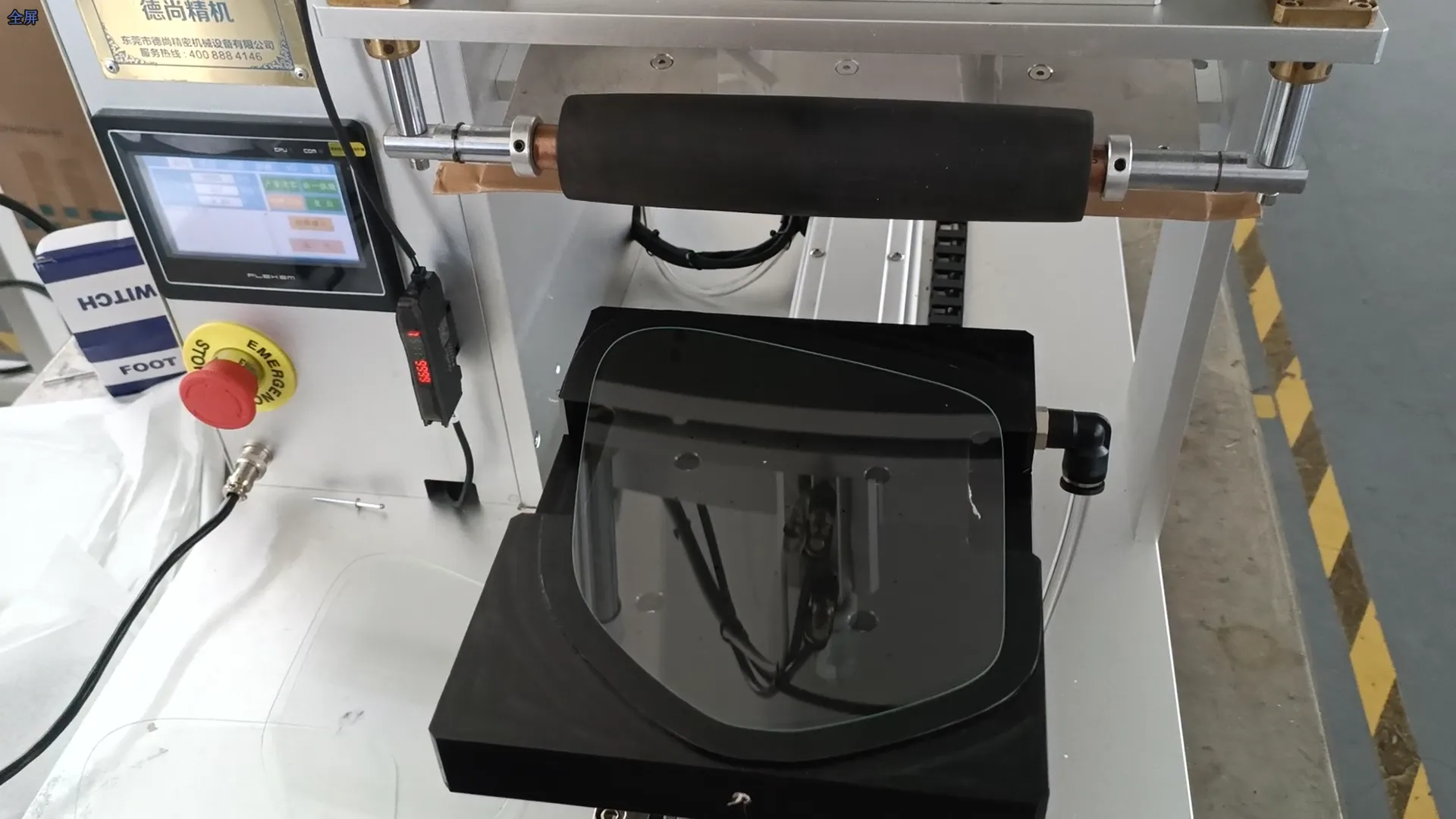
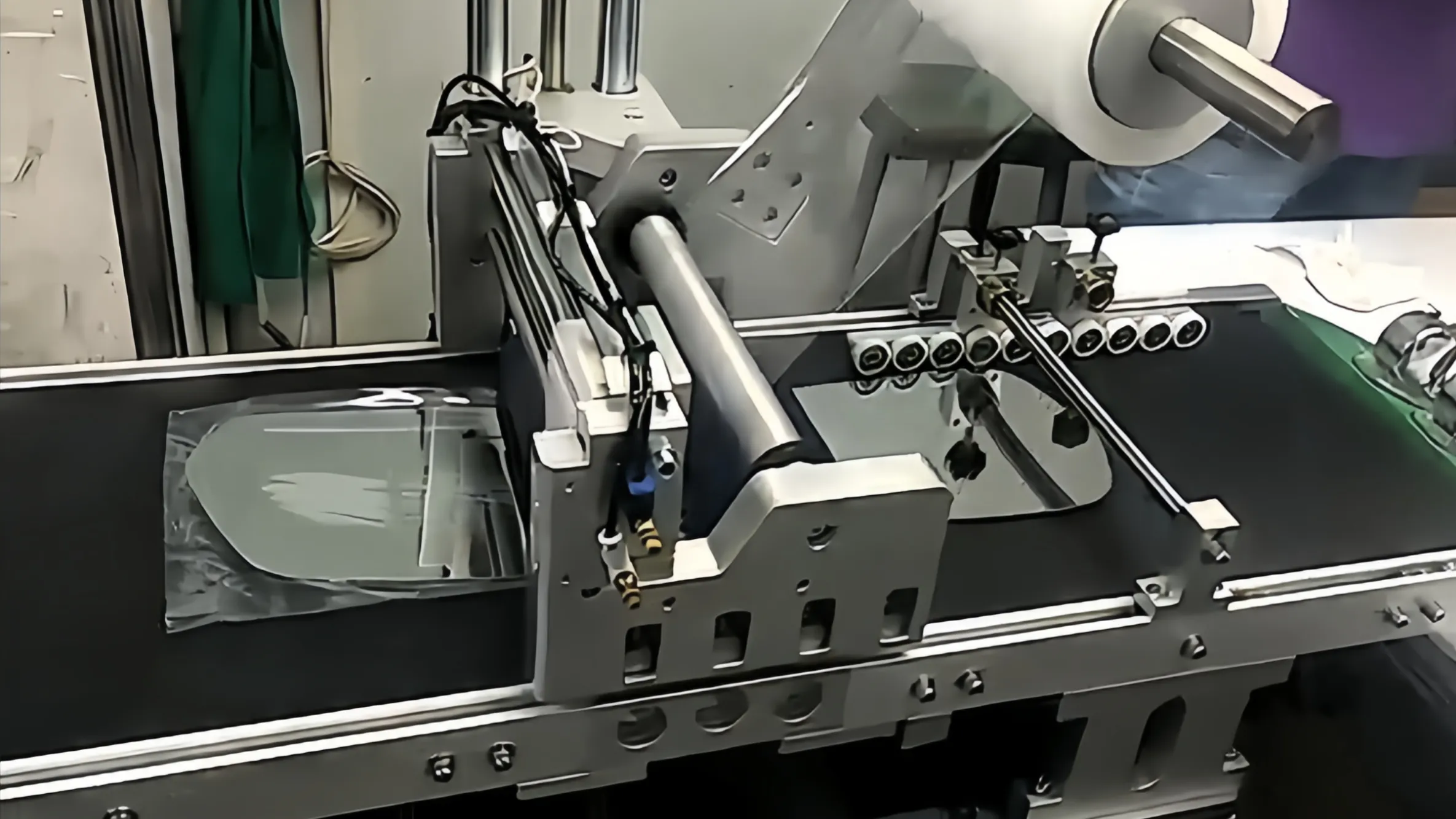
Roll application hands the sequence to the machine. Film is fixed and started at one end of the housing, and the roller presses and rolls across the curve section by section. Air is pushed ahead of the rolling direction and escapes, instead of being sealed at the low points. The application path repeats identically on every part, so the source of bubbles narrows from operator condition to process parameters.
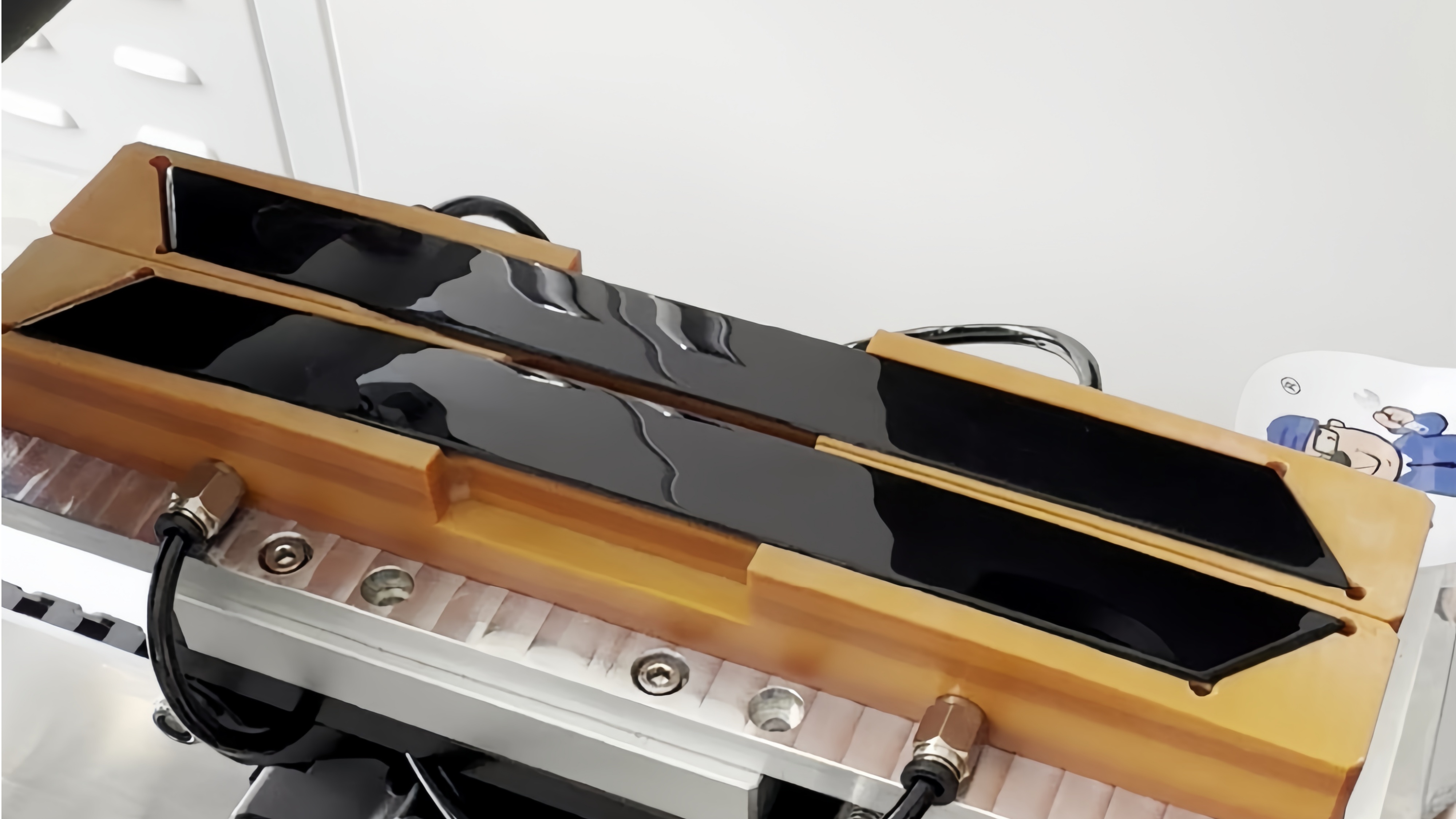
The motion cycle is fixed as well. A sensor detects the housing in position, or a foot switch starts the cycle. The lower mold retracts into place in sync with film feed, the roller presses the protective film down and expels the air beneath it, and the mold returns to its start position for the next part. Every housing travels the same film path with the same parameters.
Positioning is locked by the fixture. The housing is clamped on its datum faces, application accuracy is ±0.2mm, and the machine reproduces the film edge position regardless of shift or operator. When left and right housings ship as a pair, both sides start at the same point and roll under the same parameters, so the two film edges finally match.
These three lines are exactly what separates a rearview mirror film laminating machine from hand application.
Size window and fixture checks
Choosing an automotive side mirror housing film laminating machine starts with the size window. The DS-351 runs film lengths from 20 to 210mm with a liner width of 20 to 165mm, and the developed size of most front and rear mirror housings falls inside that range. Housings close to or beyond the window go to a trial run before any custom boundary is discussed.
Fixtures are built from the housing 3D data, and the datum faces carry the positioning. Changing to another housing model means a new fixture and new parameters, not a new machine. The desktop body weighs about 70kg, so it moves between stations on the line instead of forcing a line rebuild.
|
Parameter
|
Value
|
Parameter
|
Value
|
|
Film length
|
20 to 210mm
|
Liner width
|
20 to 165mm
|
|
Application accuracy
|
±0.2mm
|
Application speed
|
600 to 1200 pcs/h (depends on operator skill and film size)
|
|
Voltage / power
|
220V / 50Hz / 0.23kW
|
Air pressure
|
0.4 to 0.6MPa
|
|
Machine weight
|
About 70kg (desktop)
|
Overall size
|
750×600×820mm
|
Standard-model specifications of the DS-351. Special requirements and functions can be customized per part, subject to the trial-run report.
Cycle time is confirmed at your station
The 600 to 1200 pieces per hour figure depends on operator skill and the size of the protective film, so it is not a fixed number. The molding machine or the assembly line runs to a fixed takt, and the real cycle of the film station depends on how loading and unloading are laid out.
Run the machine at your station for one hour and put the measured number into the production plan.
The semi-automatic division of work is machine application with manual loading. The application motion itself is done by the machine, so a model change does not restart the cycle discussion: swap the fixture and parameters, and one pilot batch confirms the new cycle.
The DawnShine solution for mirror housings
DawnShine has built film laminating equipment for 15 years, holds more than 50 patents, manufactures under ISO 9001, and machines fixtures and tooling in its own CNC workshop. For mirror housings, the machine configured as the automotive side mirror housing film laminating machine is the DS-351 semi-automatic roll laminator.
Each difficulty maps to a mechanism: the curve is followed by roll application that presses section by section and expels air; the film edge holds because the fixture datum and ±0.2mm accuracy reproduce it; the cycle is calculable because the motion loop is fixed and measured on site. The value is not on the spec sheet. It is in these three problems stopping.
This rearview mirror film laminating machine runs PE, PVC, PET, OPP, UV, FPC and PO protective films plus pressure-sensitive labels, for transit and assembly protection. A housing is an appearance part, so its protection starts the moment it leaves the mold.
Process boundary, stated first
The laminating described here is surface protective film on the housing, not the mirror glass. Glass lamination involves optical processes and needs a separate evaluation. If your parts list also carries VHB tape, foam or clip assembly, those run on different fixtures and press heads, quoted separately.
Freeform surfaces with very large curvature, and housings beyond the 20 to 165mm liner width window, go to a sample trial first, and the custom boundary is discussed after the measured result. Customization is a fixture and program change on the same platform, not a different machine. Stating both boundaries before the quote keeps the scope of the trial aligned with the scope of the delivery.
Send one housing for a trial
Whether this automotive side mirror housing film laminating machine fits your line is verified once with four items: the housing drawing or 3D data, the film roll you actually run, your cycle time target, and the customer appearance acceptance criteria. The physical sample is the one that matters most.
|
Bring to the trial
|
What it verifies
|
|
Housing drawing or 3D data
|
Checks the developed size against the 20 to 210mm / 20 to 165mm window and confirms the roll path across the curvature
|
|
The film roll you actually run
|
Film material and liner width are verified with the real item, no substitute film
|
|
Cycle time target
|
Given from your molding or assembly takt, then re-measured in one hour on the machine
|
|
Customer appearance criteria
|
Raking-light acceptance conditions are used in the trial, and the report records results against the same standard
|
The trial runs with your film and your cycle target. The report records four items: film edge offset range, film surface under raking light, measured application accuracy, and cycle time per part. Each item maps to one acceptance action on your line.
Contact DawnShine to schedule a rearview mirror film laminating machine trial, or request a quote for the DS-351 roll laminating solution.
About DawnShine
DawnShine (Dongguan DawnShine Precision Machinery Equipment Co., Ltd.) is based in Dongguan, Guangdong, with 15 years of film laminating equipment manufacturing, more than 50 patents, ISO 9001 certification and an in-house CNC machining workshop. One selection principle: the machine is decided by your part, your film and your acceptance criteria, not by a catalog.
FAQ
Can a general flat machine work as an automotive side mirror housing film laminating machine?
A fixture solves positioning, not the film path. A flat press seals air at the low points of the curve, and the bubble positions change with the housing radius. Section-by-section roll pressing is the reason film can follow a curve, and that comes from the machine structure, not from a fixture.
What if the film width window is not enough?
The DS-351 runs a 20 to 165mm liner width and a 20 to 210mm film length. For parts near or beyond the window, send samples for a trial first. Customization is evaluated on the same platform after curvature tracking and edge quality are confirmed, not by switching to a different machine.
Can you laminate the mirror glass?
This solution applies surface protective film to the housing. Mirror glass involves optical processes, needs a separate evaluation, and is outside the standard scope of roll laminating equipment.
How is the cycle time verified?
The 600 to 1200 pieces per hour depends on operator skill and film size. Bring your loading method, run the machine for one hour, and plan production with the measured number.
🌏Website: https://www.dsautomachine.com/
📧Email: deshangjingji@gmail.com



.jpg?imageView2/1/w/64/h/64/format/webp)