Plastic Automotive Parts Film Laminating Machine: Buyer Checklist
DawnShine-Team
Plastic Parts Film Laminating Machine: Buyer Checklist
Two film laminating machine quotes sit on the purchasing desk. The configuration columns look almost identical and the prices are far apart. The cheaper unit gets approved, and the trouble starts when it lands.
Key fob shells do not sit in the fixture. Curved covers come out with a row of bubbles. The fixture and program change arrive as a separate invoice. The parameters the supplier set during the trial are never reproduced on your floor. The purchase price was saved. The hidden cost keeps arriving.
For a plastic automotive parts film laminating machine, most of the risk sits in the way quotes are compared, not in the price. Configuration sheet against configuration sheet looks fine on both sides. Put your own part and your own film roll into both trial runs, and the difference shows up the same day.
|
CORE CONCLUSION A plastic automotive parts film laminating machine is bought for stable output on your parts, not for the lowest line on a quote sheet. The step that prevents most of these mistakes: run a sample with your own part and your own film roll before payment, and put the fixture scope, acceptance terms and service response into the contract. A supplier who will not run a sample does not belong in the comparison. |
The quote sheet hides it, the part shows it
Check the film window first. The part has to sit inside the machine's film length and liner width, and a part outside that window cannot be laminated at any price. On DS-351 the window is 20 to 210 mm film length and 20 to 165 mm liner width.
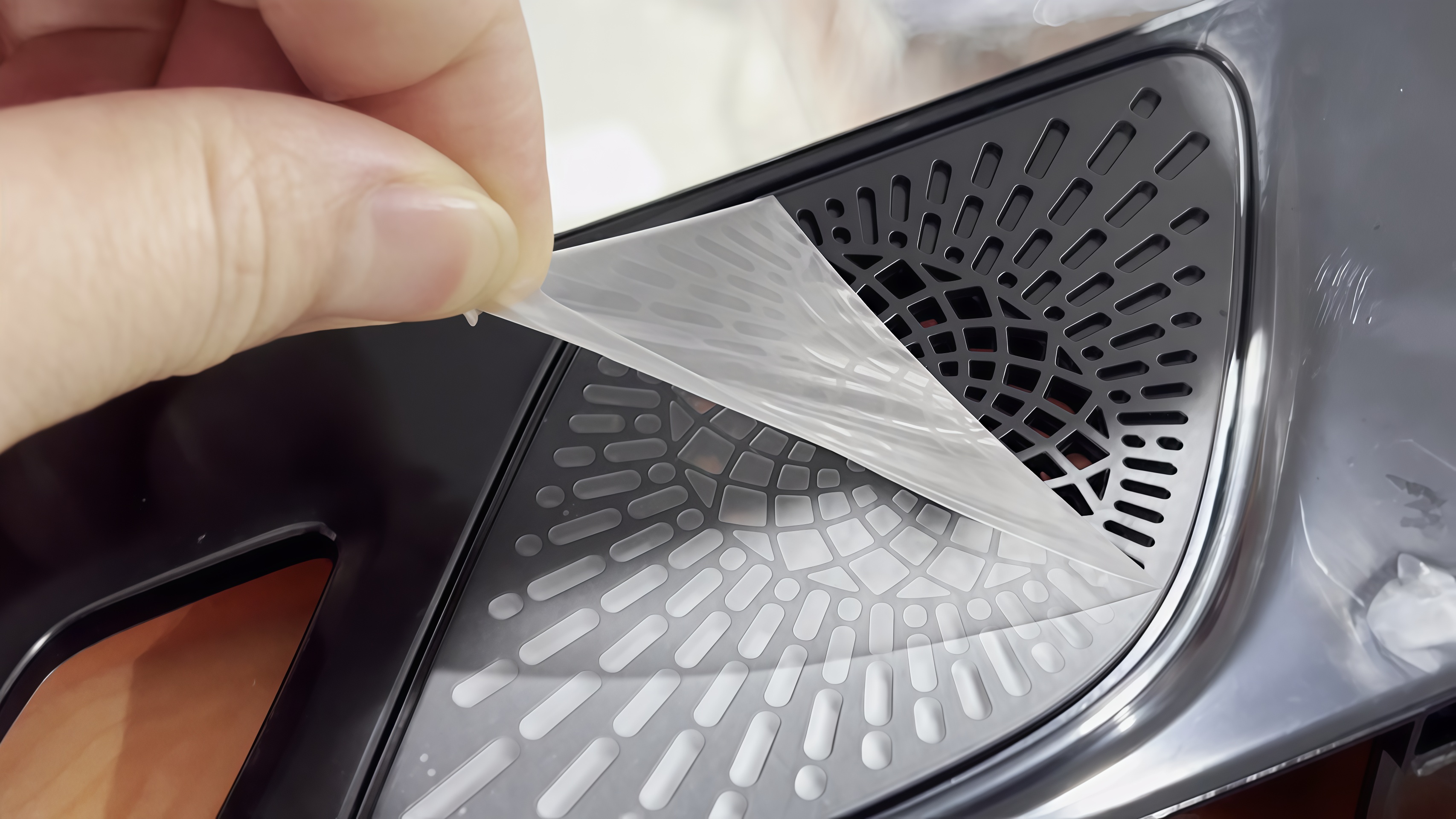
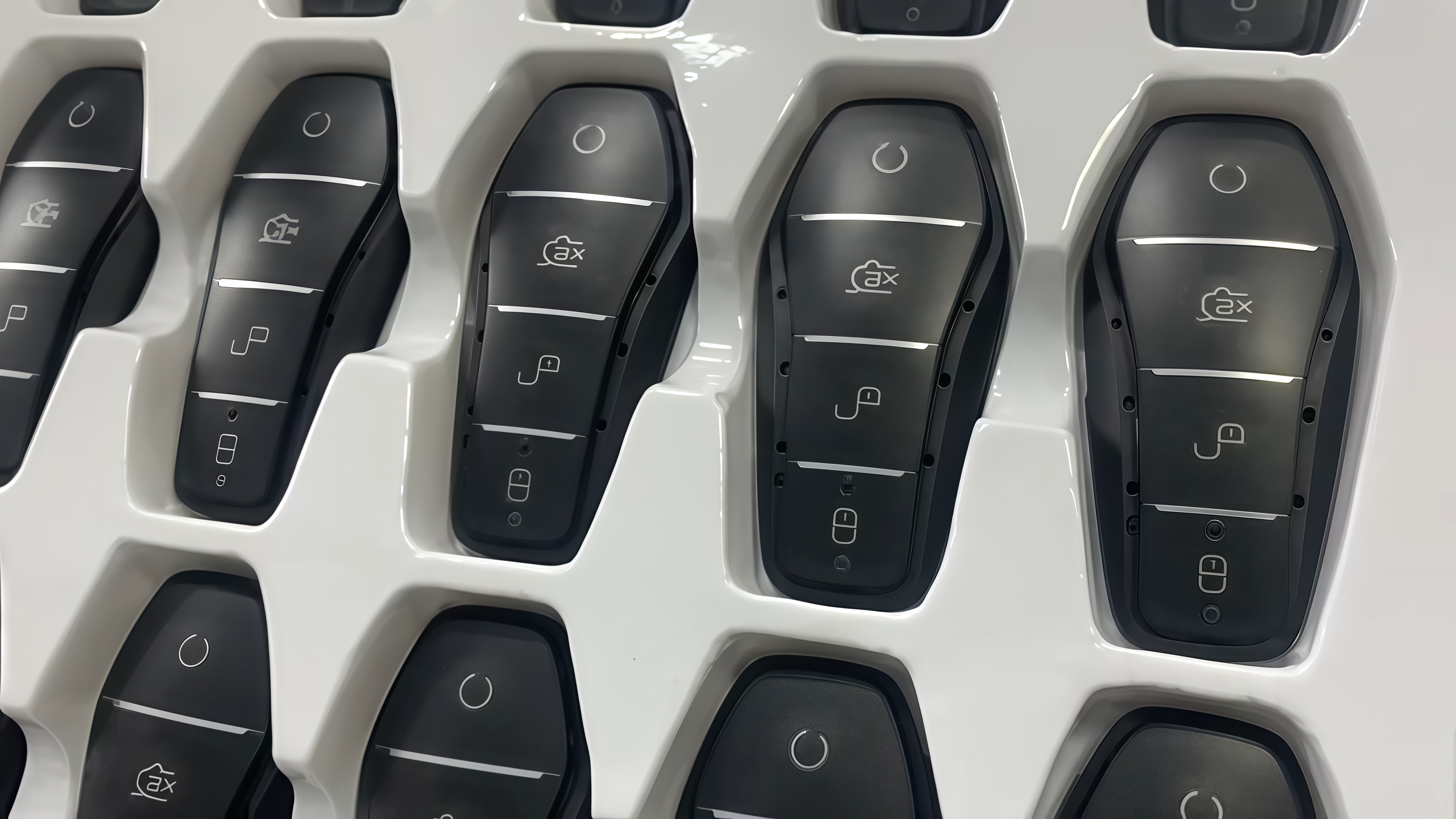
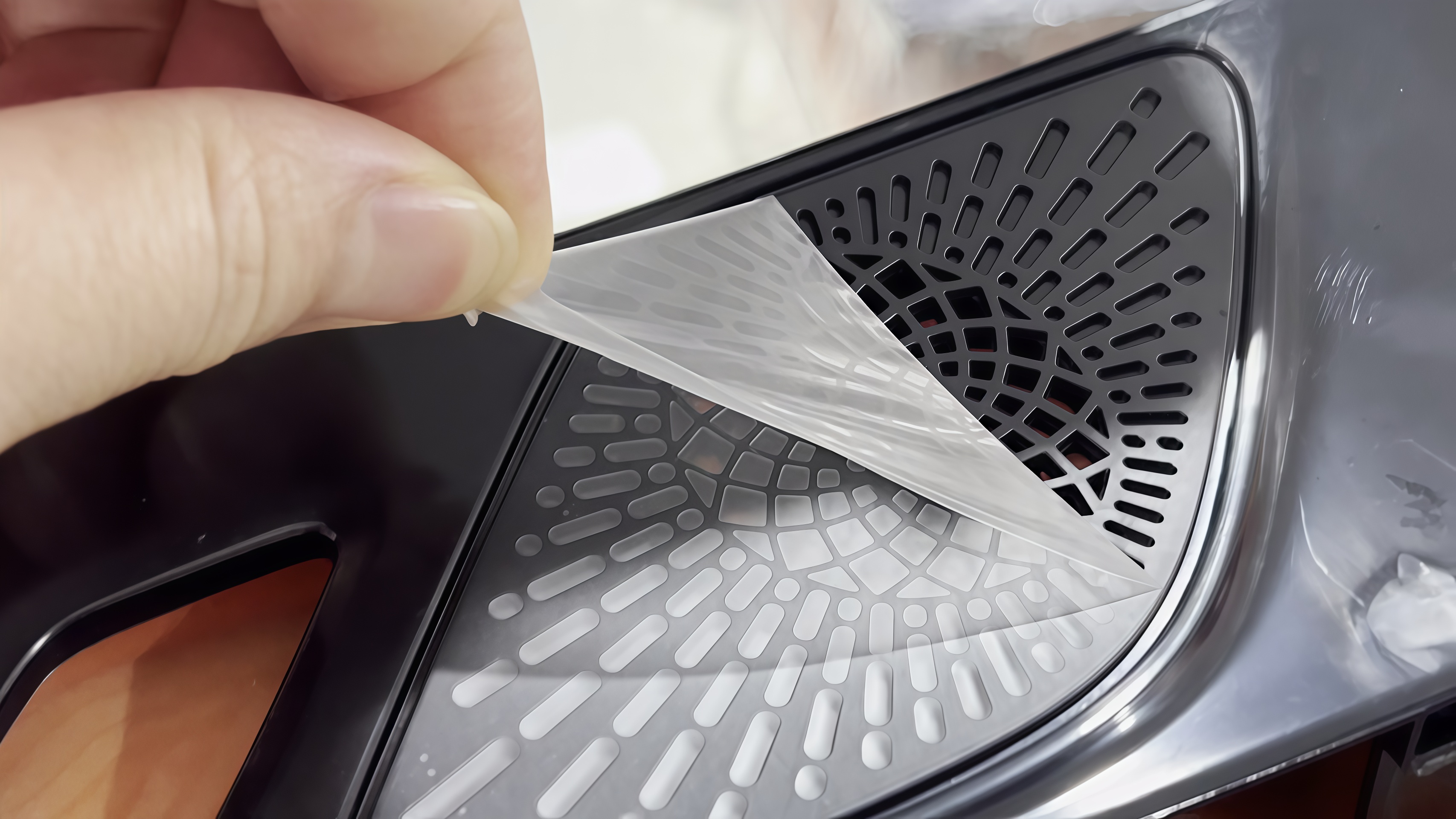
Key fob shells, gear position badges, emblem bases, speaker grilles and mirror housings all fall inside it. For parts close to or beyond the window, a sample trial comes before any custom promise.
Then check the roll path. A flat press machine can quote any plastic part, but plastic parts are rarely flat. Air at the low points of a curve is sealed in one stroke and shows as a row of bubbles under raking light.
A roll path applies pressure section by section and pushes air ahead of the bond line. On a configuration sheet this is a difference of two words. On your customer's inspection bench it is the whole batch.
Sample lamination has to use your part and your film
The parts that look perfect in a supplier showroom are usually their most familiar part and their most forgiving film. One rule for the trial: use the part you run today and the film roll you run today. Four items travel with the sample.
|
What to send for the trial |
What it reveals |
|
Part drawing or 3D data |
Confirms the part sits inside the 20 to 210 mm film length and 20 to 165 mm liner width window, and that the curve suits a roll path |
|
Film roll in use |
Film and liner width verified on the real roll, not on a substitute |
|
Takt target |
Given from your line, then verified in a one hour run on the machine |
|
Appearance acceptance standard |
Raking light conditions brought into the trial, reported against the same standard |
The trial report has to carry measured numbers: film edge offset range, measured placement accuracy, cycle time per part, and a record of the film surface. Each number maps to one acceptance action on your line. A supplier whose report holds no measurements will not hold the contract either.
Fixtures and change orders, ask before you pay
A laminating machine quote usually covers the standard machine. Fixtures are made to the part. Ask three things: whether the fixture is included, the price and lead time of one fixture, and the change process for a new part number.
An auto parts plant runs many part numbers, and a model change is a fixture and parameter change, not a machine change. That cost belongs in the total from the first quote.
Draw the process scope as well. If the part list also carries VHB tape, foam bonding or clip assembly, those run on different fixtures and heads and are quoted separately. Surface protective film application and optical bonding are two process lines. Write the scope into the purchase order so acceptance has a reference.
Takt and service belong in the acceptance terms
The 600 to 1200 pcs/h range depends on operator skill and film size, so it is a range, not a fixed figure. Printing a range on a quote is easy. Measuring it on your floor is the part that matters.
The semi-automatic film laminating machine runs the lamination while the operator loads and unloads. Ask the supplier to run your parts for one hour on site and put that number into the production plan.
Ask three service questions: whether parameter handover includes operator and changeover training, the response route and time when the machine stops, and the supply lead time for wearing parts. A supplier without written answers leaves every stoppage after delivery on the purchasing account.
The DawnShine approach to plastic parts
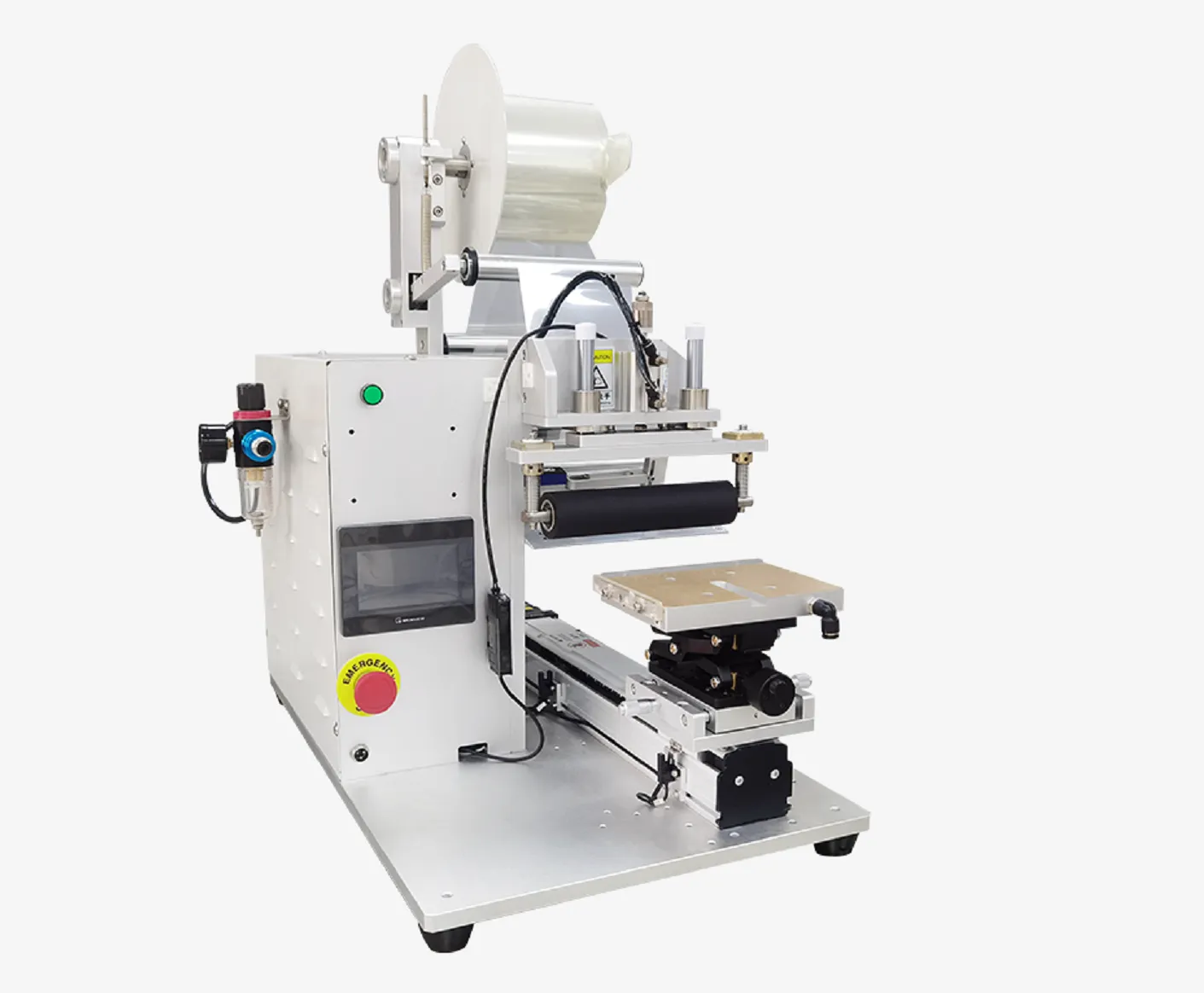
DawnShine has built film laminating equipment for 15 years, holds more than 50 patents, works under ISO 9001, and machines fixtures and tooling in its own CNC shop. For auto parts, the plastic automotive parts film laminating machine in this range is the DS-351 semi-automatic roll laminating machine, with production cases on key fob shells, gear position badges, mirror housings and exterior trim parts.
The checks above map onto the mechanism. The 20 to 210 mm film length and 20 to 165 mm liner width window takes the part first. The roll path presses section by section and vents air, so low points on a curve do not seal bubbles.
Fixtures hold placement at ±0.2 mm, so the film edge is reproduced by the machine. A model change swaps fixture and parameters, and at about 70 kg the desktop frame moves between work stations.
|
Parameter |
Value |
Parameter |
Value |
|
Film length |
20 to 210 mm |
Liner width |
20 to 165 mm |
|
Placement accuracy |
±0.2 mm |
Lamination speed |
600 to 1200 pcs/h (by operator skill and film size) |
|
Power |
220 V / 50 Hz / 0.23 kW |
Air pressure |
0.4 to 0.6 MPa |
|
Weight |
about 70 kg (desktop) |
Footprint |
750 x 600 x 820 mm |
DS-351 standard specifications. Special requirements and functions are customized to the part, confirmed by a trial report.
Film materials on this semi-automatic film laminating machine cover PE, PVC, PET, OPP, UV, FPC and PO protective film plus adhesive labels, used for transport and assembly protection. A plastic part is an appearance part, and protection starts the moment it leaves the mold. The film scope belongs in the purchase contract as well.
Process boundaries, stated up front
DS-351 covers flat surfaces, small curves and small cylindrical surfaces. Free-form surfaces with heavy curvature, or parts beyond the 20 to 165 mm liner width window, go through a sample trial before any custom boundary is discussed. Custom work means fixture and program changes on the same platform, not another machine.
This article covers surface protective film application for transport and assembly protection. It does not cover optical bonding, and it does not cover full vehicle wrapping. Write the process scope into the purchase contract and acceptance has a landing point.
What to attach to your RFQ
Send this list with the enquiry and quotes arrive on the same footing: the part drawing or 3D data, the film roll in use, the takt target, and the customer's appearance acceptance standard. With all four, every supplier samples against the same ruler, and the price gap and the value gap both become visible.
Contact DawnShine to book a trial for a plastic automotive parts film laminating machine, or to request a quote for the DS-351 roll lamination setup.
About DawnShine
DawnShine (Dongguan DawnShine Precision Machinery Equipment Co., Ltd.) is based in Dongguan, Guangdong, with 15 years in film laminating equipment, more than 50 patents, ISO 9001 certification and an in-house CNC shop. One selection rule: the machine follows your part, your film and your acceptance standard, not a catalogue.
Frequently asked questions
Why do quotes for the same configuration differ so much?
Configuration sheets match, fixture capability, roll structure, assembly accuracy and service do not. The way to read the gap is not to press the price. Put your parts into both trials and compare results against one acceptance standard.
Can a general purpose laminating machine do the job?
Auto parts differ in curvature, size and appearance acceptance. A flat press path cannot vent air at the low points of a curve. Send a sample and verify the window and the roll path before any purchase decision.
How is fixture cost handled?
Fixtures are made to the part and quoted from the drawing, based on size, datum and complexity. On the DS-351 platform a semi-automatic film laminating machine stays in place while fixture and parameters change, which keeps the later cost of a multi part line manageable.
What belongs in the purchase contract?
The measured numbers from the trial report, the fixture scope and change price, and the training and service terms. With those three groups in writing, incoming inspection and later model expansion both have a reference.
Website: https://www.dsautomachine.com/
Email: deshangjingji@gmail.com
Table of Contents
Recent Articles
Car Key Fob Housing Film Application Machine Guide
November, 20, 2026
Automotive Pillar Trim Laminating Machine Coverage
November, 17, 2026
Plastic Automotive Parts Film Laminating Machine: Buyer Checklist
November, 12, 2026
Automotive Exterior Trim Laminating Machine: Overhang and Bubbles
November, 10, 2026
Related Articles
Explore more insights from our technology and innovation coverage