Automotive Pillar Trim Laminating Machine Coverage
DawnShine
Automotive Pillar Trim Laminating Machine Coverage
A single vehicle program lists dozens of trim part numbers. A pillars to D pillars, quarter trim panels and display surrounds, one machine assigned to each part type, and the equipment budget multiplies while the floor space runs out.
Several machines also carry a cost that never appears on a quote: handling. Every extra move between stations is another chance for dust and scratches on a gloss black surface; under the raking light of a customer inspection, one batch is judged out, and rework is expensive no matter where it starts.
Choosing an automotive pillar trim laminating machine is a comparison of coverage cost, not unit price. Put the whole parts list against the window of one machine first, then compare quotes, and the conclusion changes.
|
CORE CONCLUSION Coverage is checked on three layers: a film length of 20~550mm and a liner width of 20~220mm take the parts in first; a roll path with automatic level adjustment handles flat, curved and shaped parts; dual heads on dual Y axes clear paired parts in one pass. Changeover touches fixtures only, the machine stays. Validate the conclusion by trial: send your own A to D pillars and quarter trim panels before you decide. |
The first gate of coverage is the film window, not the part name
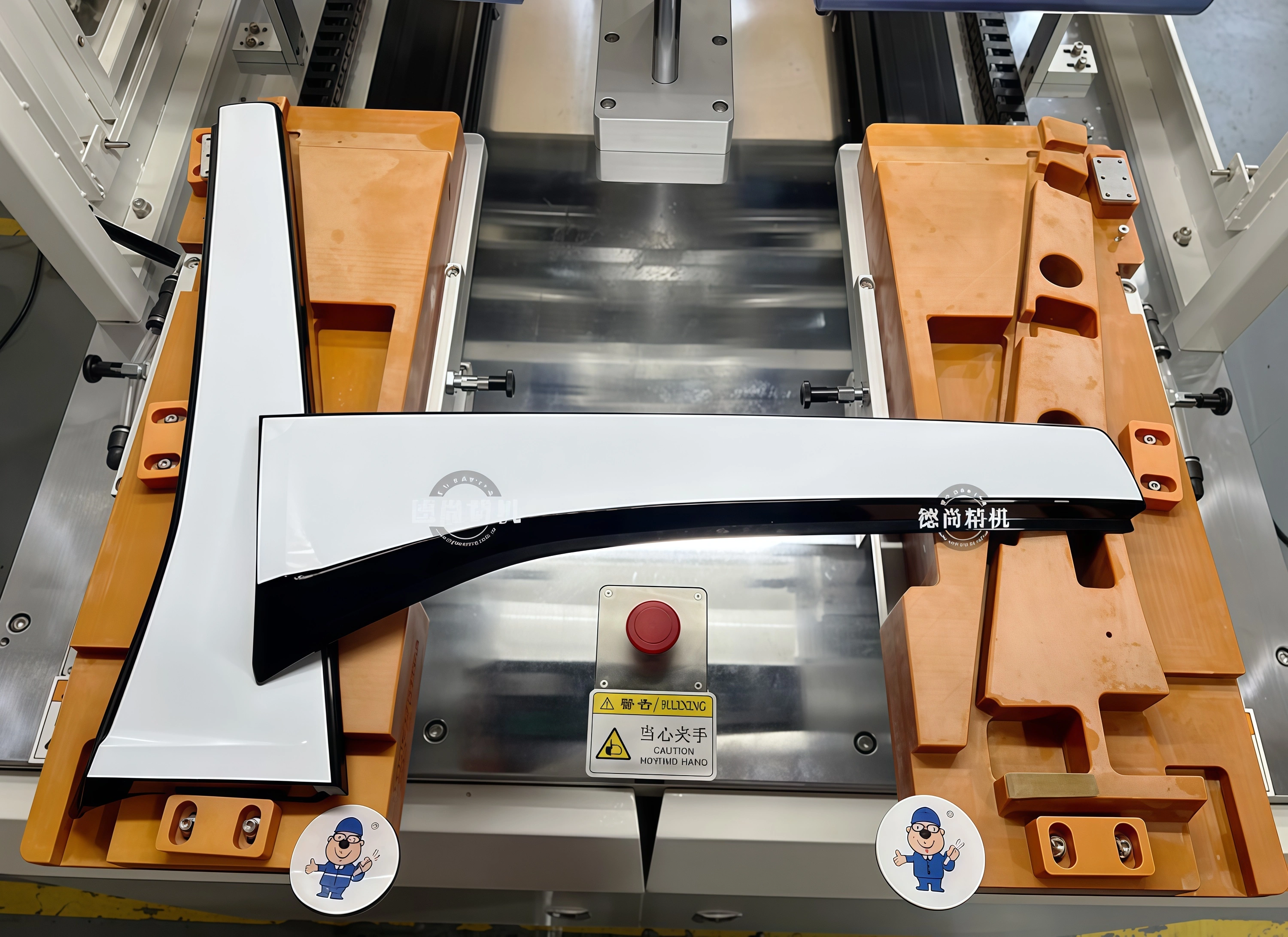
Coverage of an automotive trim panel laminating machine starts with two numbers. Film length 20~550mm and liner width 20~220mm cover the unfolded size of most pillar panels and quarter trim parts; parts near or beyond the boundary go to trial with real samples, not verbal promises at the quote stage.
Accuracy follows the shape of the part. The DS-363 holds plus or minus 0.5mm on flat parts and plus or minus 1mm on shaped parts. Pillar panels mostly carry curvature and clip seats, so check them as shaped parts and write the standard for each part number into the quote, or acceptance turns into negotiation.
Curvature and steps decide whether one machine replaces several
The roll path is what covers many shapes. Pressure is applied section by section and air escapes ahead of the bond line, so the low points of a curve do not trap bubbles; on parts with a step deeper than 70mm, the laminating head follows the step automatically, and panels with high and low zones stay on one machine.
Height adjustment does not rely on a screw. Setting head height is a daily operation during changeover; removing that step from the structure cuts changeover time, and every avoided stop is a return on coverage cost.
Dual heads, dual Y axes: paired and mirrored parts in one pass
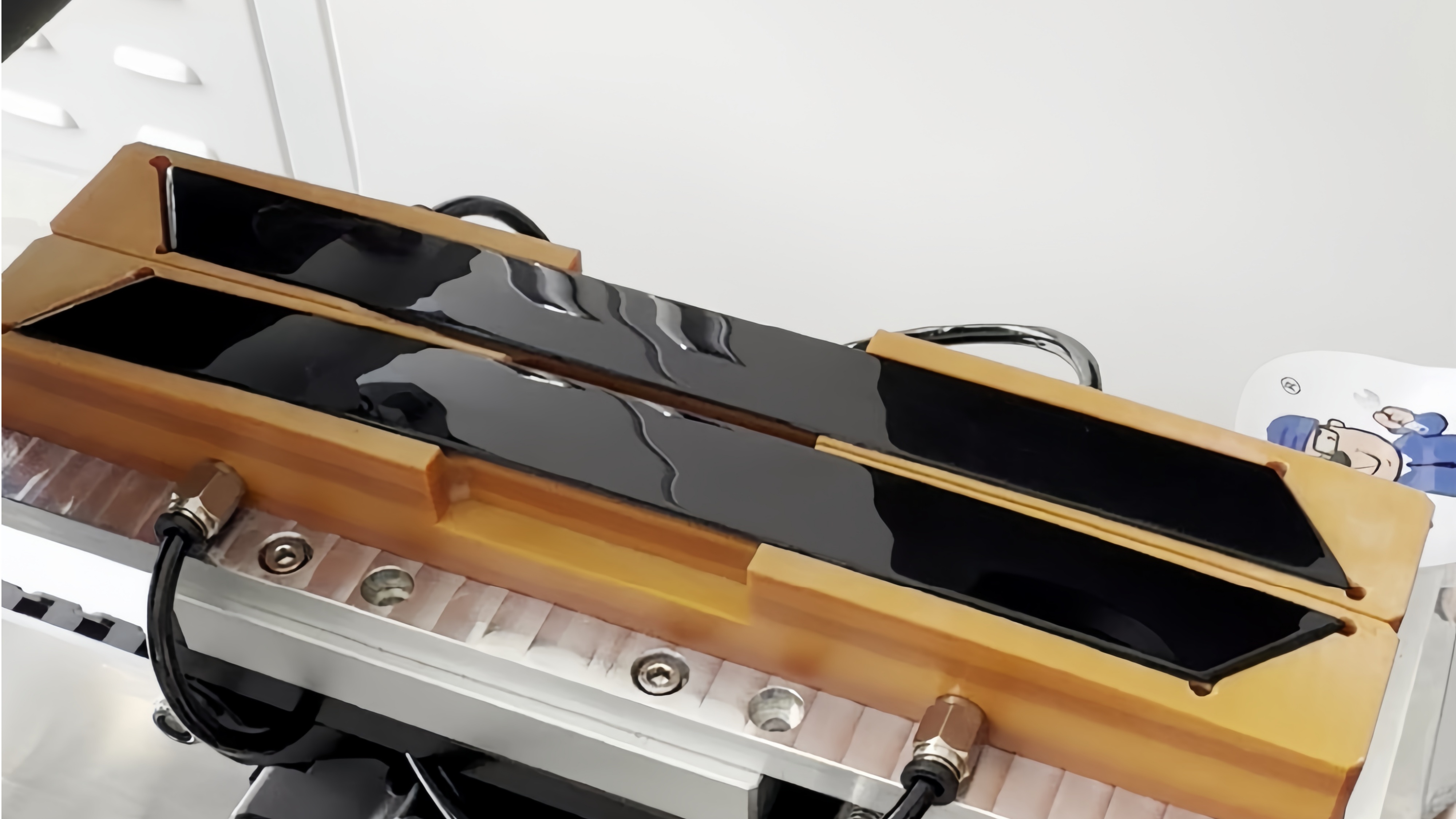
Paired and mirrored parts are where output doubles. Dual heads with dual modules run single or alternating continuous duty at 300~500 pairs per hour, depending on operator skill and film size; left and right pillar panels are laminated on both sides in one clamping, which removes a handling step and its contamination risk.
Changeover replaces fixtures and parameters, not the machine
The cost center of a multi model line sits in fixtures and change control. Each part number maps to one fixture set and one parameter set; a new part number is a fixture change order while the machine stays, and magazine detection, mistake proofing and misjudgment protection are standard on the machine.
Keep the coverage ledger of an automotive trim panel laminating machine by part number. Ask the fixture price and lead time for each part number at the quote stage and put them in the total cost; later additions follow change orders instead of a new machine comparison.

The DawnShine pillar and trim solution
DawnShine has built laminating equipment for 15 years, holds more than 50 patents, works under ISO 9001, and machines fixtures in its own CNC shop. The machine configured for this range is the DS-363 automotive B and C pillar roll laminating machine, with production cases on B, C and D pillars and quarter trim panels.
Three mechanisms carry the coverage claim: the window takes the parts in, the roll path and level adjustment take the shapes, and the dual heads take the paired output. Together they bring one trim list onto one machine.
|
Parameter |
Value |
Parameter |
Value |
|
Film length |
20~550mm |
Liner width |
20~220mm |
|
Accuracy |
±0.5mm flat / ±1mm shaped |
Output |
300~500 pairs/hour (by skill and film size) |
|
Voltage / power |
220V / 50Hz / 1.5kW |
Air pressure |
0.4~0.6MPa |
|
Machine weight |
about 300kg, floor standing |
Dimensions |
1300×1000×1950mm |
DS-363 standard configuration. Special requirements are configured to the part, subject to the trial report.
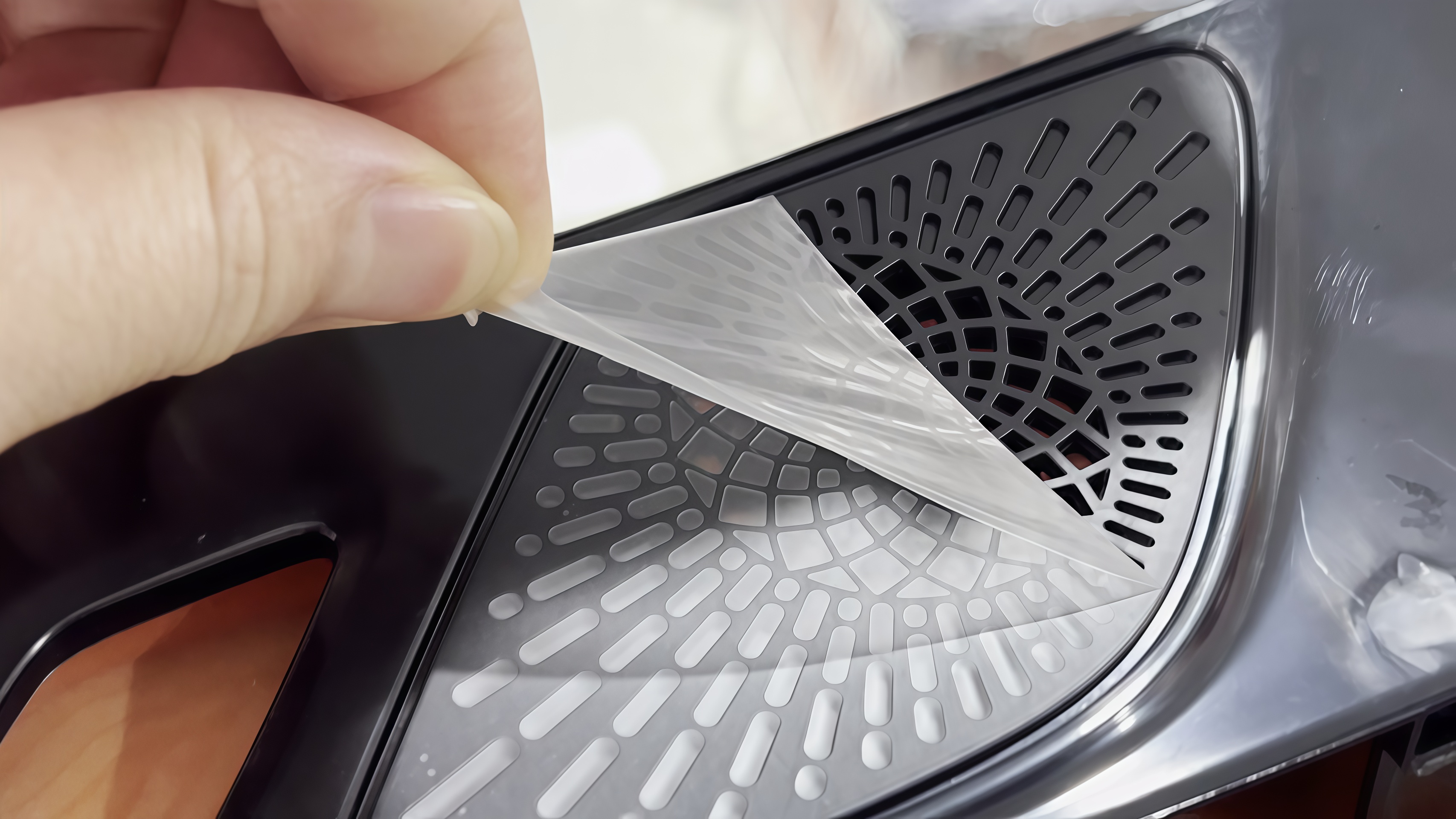
Film types cover PE, PVC, PET, OPP, UV, FPC and PO protective films plus pressure sensitive labels. White film and transparent film scenarios both fall in range, selected against your transport and assembly protection requirements.
Process boundaries are written at the quote stage
The DS-363 applies labels and protective film on flat and small curvature parts. Parts with very large curvature or beyond the window go to trial before any custom talk, and full vehicle wrapping is out of range. Display surfaces such as a navigation screen are evaluated as protective film application, a separate process line from optical bonding (OCA), and the purchase documents should keep them apart.
Coverage evaluation needs one parts list
Send the list with four items: part drawings or 3D data, the film rolls actually in use, the takt target, and the customer appearance acceptance standard. A to D pillars, quarter trim panels and display surrounds go through the window, roll path and accuracy checks one by one, and the trial report returns numbers per part number.
Contact DawnShine to book a trial for an automotive pillar trim laminating machine, or to request a quote for the DS-363 dual head roll setup.
About DawnShine
DawnShine (Dongguan Deshang Precision Machinery Co., Ltd.) is based in Dongguan, Guangdong, with 15 years of laminating equipment manufacturing, more than 50 patents, ISO 9001 certification and an in house CNC shop. The selection rule does not change: your parts list, film and acceptance standard decide the machine, not the catalog.
Frequently asked questions
Does covering this many part numbers on one machine slow the line?
Changeover on an automotive pillar trim laminating machine touches fixtures and parameters only, and head height adjustment does not need a screw. Put a full changeover cycle into the trial, record it in minutes, and write it into the production plan.
Is 300 to 500 pairs per hour a stable figure?
It is a range, set by part size, film specification and operator skill. Give the takt target to the supplier at the quote stage, run one hour on the machine to verify, and write the number into the acceptance clause.
Is accuracy on shaped parts the same as on flat parts for an automotive trim panel laminating machine?
No: flat parts hold plus or minus 0.5mm, shaped parts plus or minus 1mm. Check pillar panels mostly as shaped parts and write the standard for each part number into the acceptance clause.
Is display cover lamination the same process as pillar lamination?
Screen surfaces take protective film application, which is not optical bonding (OCA). Evaluate and quote the two needs separately, keep the purchase documents apart, and apply the acceptance standard of each.
Website: An OEM Manufacturer of Automatic Laminating Equipment with Over 15 Years of Expertise
Email: deshangjingji@gmail.com
Table of Contents
Recent Articles
Car Key Fob Housing Film Application Machine Guide
November, 20, 2026
Automotive Pillar Trim Laminating Machine Coverage
November, 17, 2026
Plastic Automotive Parts Film Laminating Machine: Buyer Checklist
November, 12, 2026
Automotive Exterior Trim Laminating Machine: Overhang and Bubbles
November, 10, 2026
Related Articles
Explore more insights from our technology and innovation coverage