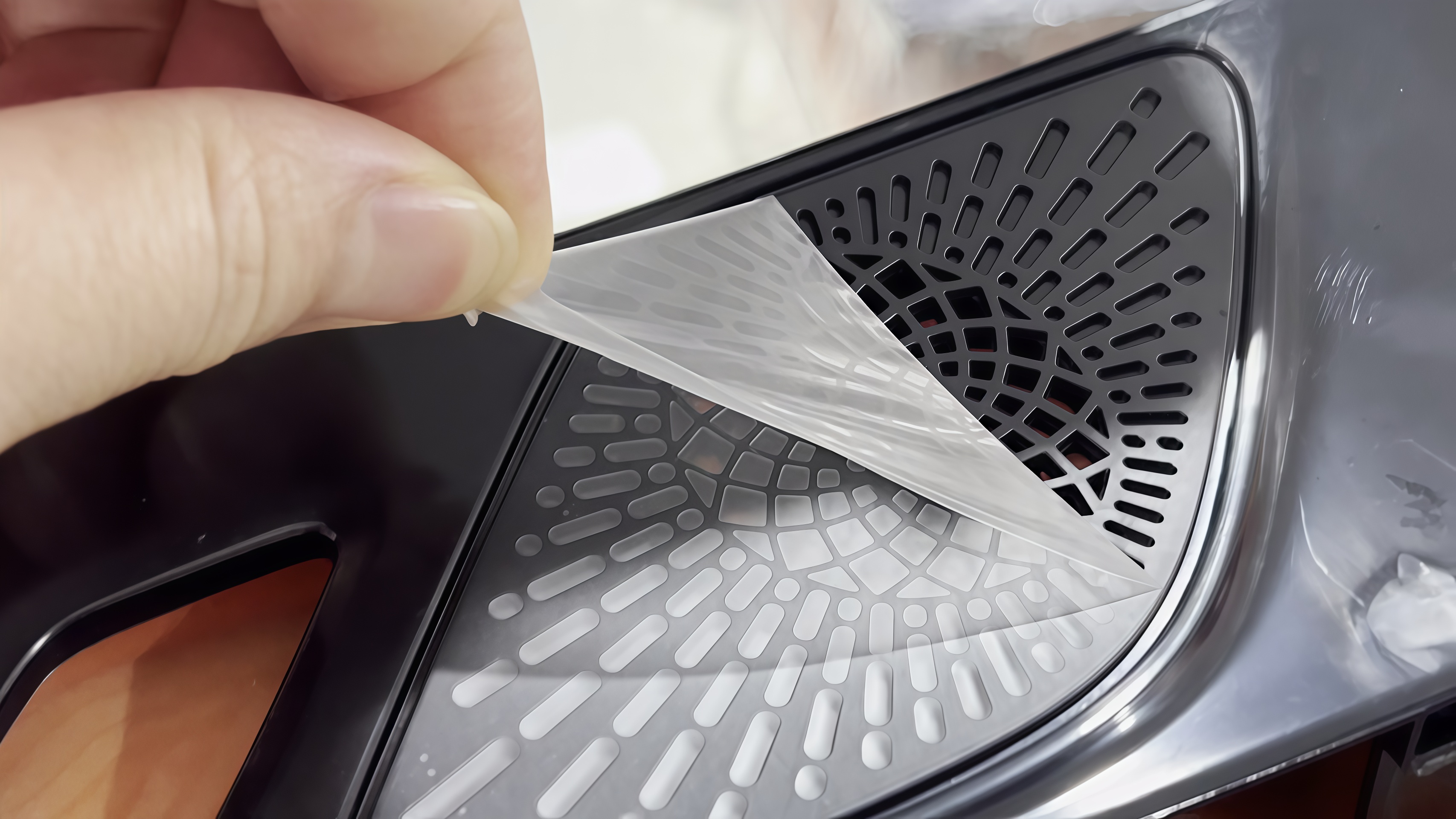
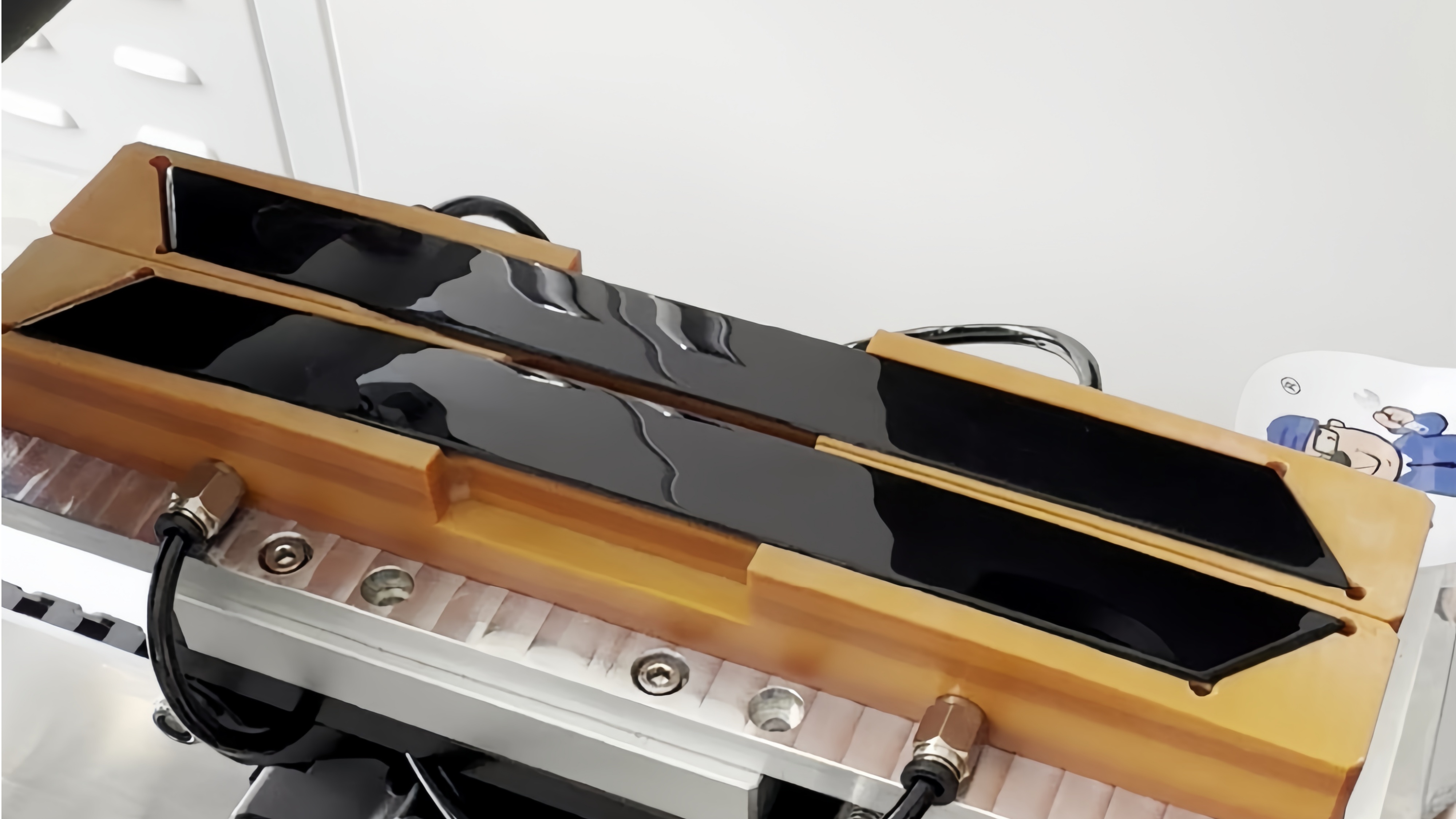
Written from the seat of a process engineer at an automotive electronics plant: why the film inset separates manual work from machine work, and what to verify before you commit.
Why HUD Parts Punish Film Defects More Than Molded Trim
Whether the part is a HUD combiner mirror or a display window panel, the surface is optical grade. Film on top of it is held to a different standard than film on ordinary plastic trim.
● The display window must stay uncovered. If a film edge crosses the reserved inset line and shades the active area, the customer rejects the part the moment it is lit. Hand-cut insets depend on a template and a steady hand, so part-to-part variation is the norm, not the exception.
● A mirror finish magnifies every defect. Bubbles, wrinkles and dust marks that hide on matte plastic are a visible shadow under raking light on a reflective HUD surface. The inspection method alone pushes the rejection rate up.
● Curved is not flat. A combiner mirror is a freeform part, and the film must follow the curve continuously. A press-style head seals air into the low areas, so bubbles cluster at the curved edges.
So when you evaluate a HUD film laminating machine, the question is not whether it can stick film to a part, but whether it has a mechanism for inset accuracy, film cleanliness and curved surfaces.
Film Inset: The Line Between Manual Work and Machine Work
Inset accuracy on a display part is not rescued by hand trimming. Trimming after application adds a process step and one more chance to scratch a mirror surface. The deeper problem: a hand-trimmed inset is decided by a template and feel, so batch consistency never gets established.
The customer sees a different film edge on every part, and production has to explain operator variation that changes with every shift.
The DS-306 applies a single layer of film on one face and cuts it automatically right after application. The edge margin or inset is set per part at 1 to 2mm, so parts leave the machine finished, with no second trimming step.
From that point the inset is decided by a cutting parameter, not by whoever is at the station: it repeats part after part, and the film edge stays out of the display window.
How to verify: after a trial run, measure the inset on ten parts and look at the range, not the average. Also confirm the 1 to 2mm band is set from your display window drawing, not a fixed value baked into the machine.
Curved Surfaces, and Pressure That Keeps Film Clean
The real geometry of a HUD part is a mix of flat areas, small curves and shallow recesses. The DS-306 is specified for exactly those three. Freeform parts like a combiner mirror fall inside the window of its roll application process.
The roller presses the film down section by section from one edge, so air is pushed ahead of the bond line instead of being sealed under the film.
On a mirror-finish part, any bubble or wrinkle under the film shows up the moment the display is lit or the surface reflects. The DS-306 controls application pressure precisely, and wrinkles and bubbles are intercepted at factory inspection before shipment.
The version that matters to you: variation moves from the operator to the process parameters, which is the only condition under which quality can manage it as a process problem.
How to verify: send the part with the largest curvature for the trial and inspect the curved edges under a raking light; then run the trial parts past your customer's lit-part criteria.
Size Window and Cycle Time, Before You Order
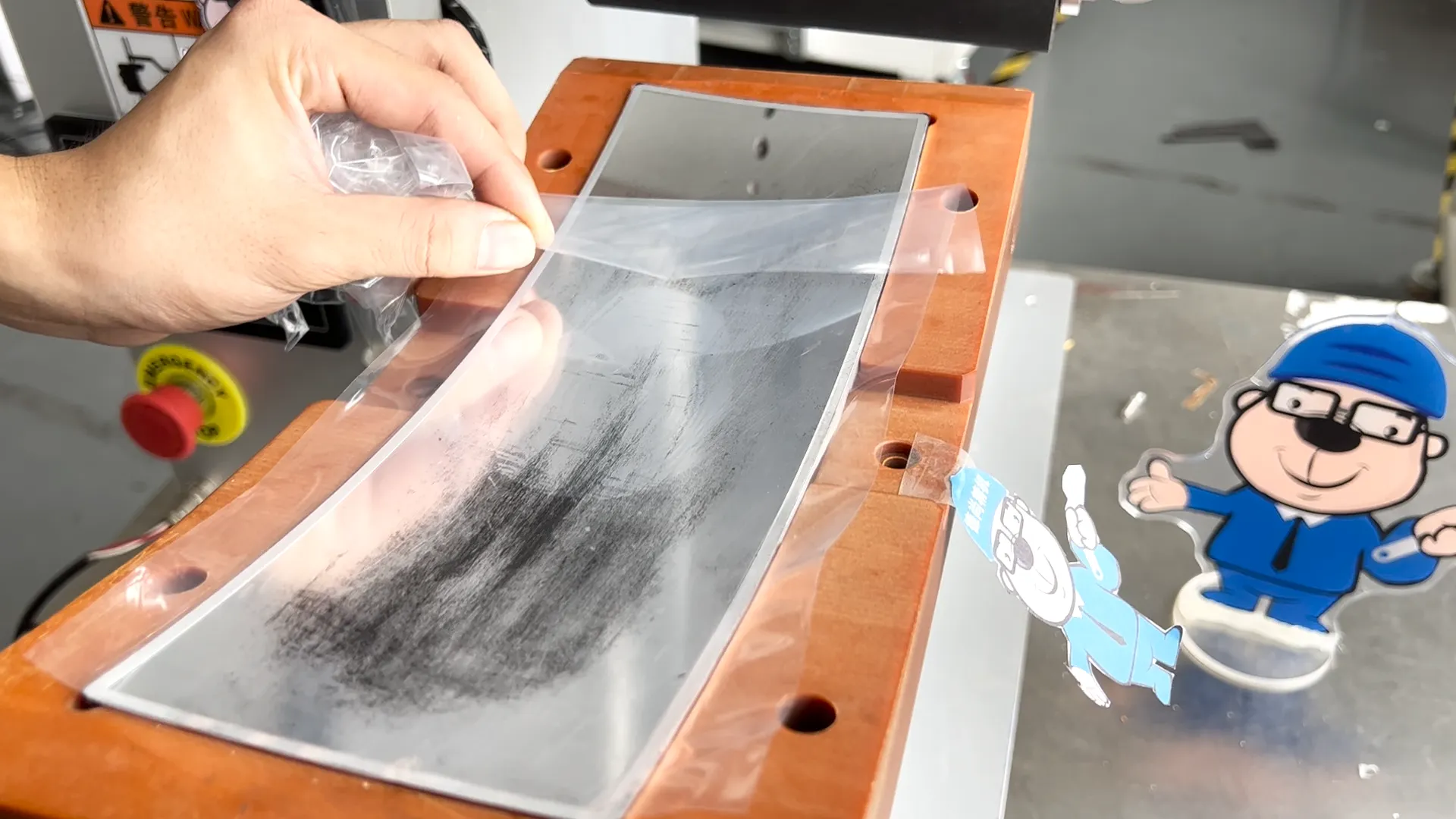
This semi-automatic film laminating machine takes parts up to 240mm long, 150mm wide and 60mm high, with larger sizes customizable, and runs at 600 to 1000 pieces per hour. HUD parts are mostly small and mid-size panels that fit the standard window; cycle time should be re-checked against your loading and unloading layout.
How to verify: match your drawing's largest outline against 240 x 150 x 60mm. Ask for an output figure with your film size and loading method attached, then run one hour with your own operator and put that number into the plan.
The DawnShine Answer: DS-306 Single-Layer Film Laminating Machine
DawnShine has built laminating equipment for 15 years, holds more than 50 patents, produces under an ISO 9001 system and machines its own fixtures and special tooling on in-house CNC, with nothing outsourced.
For head-up display parts and other optical-grade surfaces, the HUD film laminating machine we quote is the DS-306 semi-automatic laminator (single-layer film). The three problems above map to the specification like this:
|
Problem
|
DS-306 capability
|
|
Film inset holds
|
Single-layer film on one face, automatic cutting, edge margin or inset set per part at 1-2mm, no re-trimming
|
|
Curved surfaces covered
|
Roll application for flat, small-curve and shallow-recess parts, including freeform HUD components
|
|
Film pressed clean
|
Precision pressure control, air pushed out along the rolling direction, wrinkles and bubbles intercepted at factory inspection
|
|
Size and cycle time clear
|
Part window 240 x 150 x 60mm (larger sizes customizable), 600-1000 pcs/h
|
Standard-model specifications; customization available per part, subject to the trial-run report.
Standard Model Specifications
|
Item
|
Value
|
|
Model
|
DS-306 semi-automatic laminating machine (single-layer film)
|
|
Films
|
PE, PVC, PET, OPP, UV, FPC, PO films, adhesive labels
|
|
Applications
|
Flat-surface, small-curve and shallow-recess film application
|
|
Cutting
|
Automatic cutting, edge margin or inset 1-2mm set per part
|
|
Part size window
|
240mm L x 150mm W x 60mm H (larger sizes customizable)
|
|
Max speed
|
600-1000 pcs/h
|
|
Application accuracy (margin/inset)
|
+/-1mm-2mm
|
|
Power
|
Three-phase AC220V, 50Hz, 0.55kW
|
|
Application pressure
|
0.5-2MPa
|
|
Footprint / weight
|
700 x 530 x 750mm, approx. 75kg
|
Desktop-format construction: at about 75kg it moves between stations; a new part number means a new fixture, not a second machine.
What Changes on the Line
The value is in four things stopping.
● The film edge stays out of the display window. The inset is decided by machine cutting instead of hand trimming, so it repeats part after part, and the display window passes the customer's lit-part inspection with a clean edge.
● No re-trimming, one less way to scratch a mirror. Parts come off finished. The post-processing area loses a station, and a trimming blade never touches the optical surface.
● Display-grade rejection becomes a process problem. The source of bubble, wrinkle and dust variation narrows from operator state to process parameters, when inspection data starts to be worth managing.
● New part numbers do not need a new machine. The desktop body and 75kg weight let the machine move between stations. A new HUD part number arrives as a new fixture, not a second purchase order.
Process Boundaries, Stated Upfront
This machine performs protective film application on the surface of HUD parts, for transit and assembly protection. Optical functional films that appear in head-up display projects, such as wedge films and brightness-enhancing films, are a different process involving optical adhesives and cleanroom conditions. They are outside this machine's scope and need a separate project review.
If your bill of materials also includes VHB tape, foam or clip assembly, those run through different heads and material paths and are quoted as separate projects.
Parts beyond 240 x 150 x 60mm go to a trial run first; confirmed customization is a tooling change on the same platform, not a different machine.
Send 3 HUD Parts for a Trial Run
Whether a HUD film laminating machine fits your parts comes down to inset, curvature, film cleanliness, size and cycle time, and one real part verifies all of them.
Send 3 parts from your line, including the one with the largest curvature, the film roll you actually run, and your target cycle time. We run them on the DS-306 and report the inset range, the film surface under raking light, and the cycle time per part.
Contact DawnShine to schedule a HUD part trial, or request a quote for the DS-306 single-layer film laminating machine.
Frequently Asked Questions
Is head-up display film application the same as optical bonding?
No. The HUD film laminating machine described here applies surface protective film for transit and assembly protection. Optical functional film lamination involves optical adhesives and cleanroom conditions and is a separate process requiring its own review.
Is the 1-2mm inset a fixed machine value?
No. The inset or edge margin is set per part on the automatic cutting system, fixed during the trial run against your display window drawing; every part then runs to the same setting.
My part is larger than 240 x 150 x 60mm. What now?
The standard window is 240 x 150 x 60mm. Send the part for a trial first; if customization is confirmed, it is a tooling change on the same platform, not a different machine.
Does the film still need manual trimming?
No. The DS-306 cuts the film automatically and parts leave the machine finished, which also removes the trimming blade as a scratch risk on mirror surfaces.



.jpg)
.jpg?imageView2/1/w/64/h/64/format/webp)