Automotive B-Pillar Trim Laminating Machine: 5 B-Pillar Checks
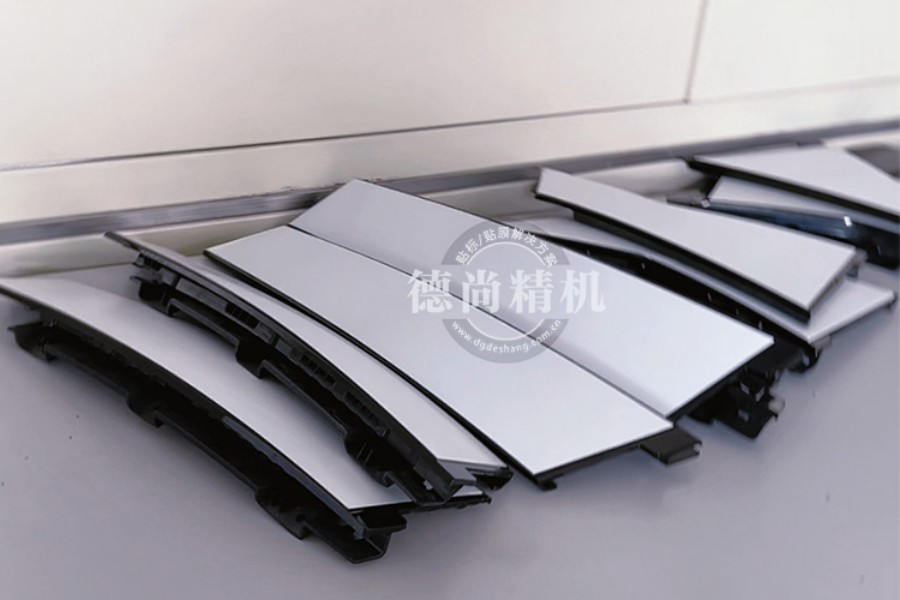
A batch of piano black B-pillar covers leaves your plant looking clean and arrives at the customer with four bubbles along the roller path. The lot goes on hold, the claim lands six weeks later, and the machine that produced it was sold to you as built for automotive trim.
|
CORE POINT
Five checks decide whether an automotive trim film laminating machine can hold a cosmetic standard on curved, glossy trim: it must lay film by rolling, follow part height, apply a pair as a pair, run your film deck, and state output with its conditions.
Run these five against one real B-pillar cover. A machine that answers all five is the only one worth quoting.
The rest of this article shows what each check looks like on the shop floor, and how the DS-363 answers them.
|
That gap is not an operator problem and it is not a film problem. It is a specification problem, and it can be settled before the purchase order is signed.
Most quotations arrive with the same line: built for the automotive industry. Few arrive with the evidence, so here is the list we use with trim suppliers.
Why a General-Purpose Machine Fails on B-Pillar Trim
A protective film on a flat plastic housing is a simple problem. A protective film on a pillar cover is not, for four reasons.
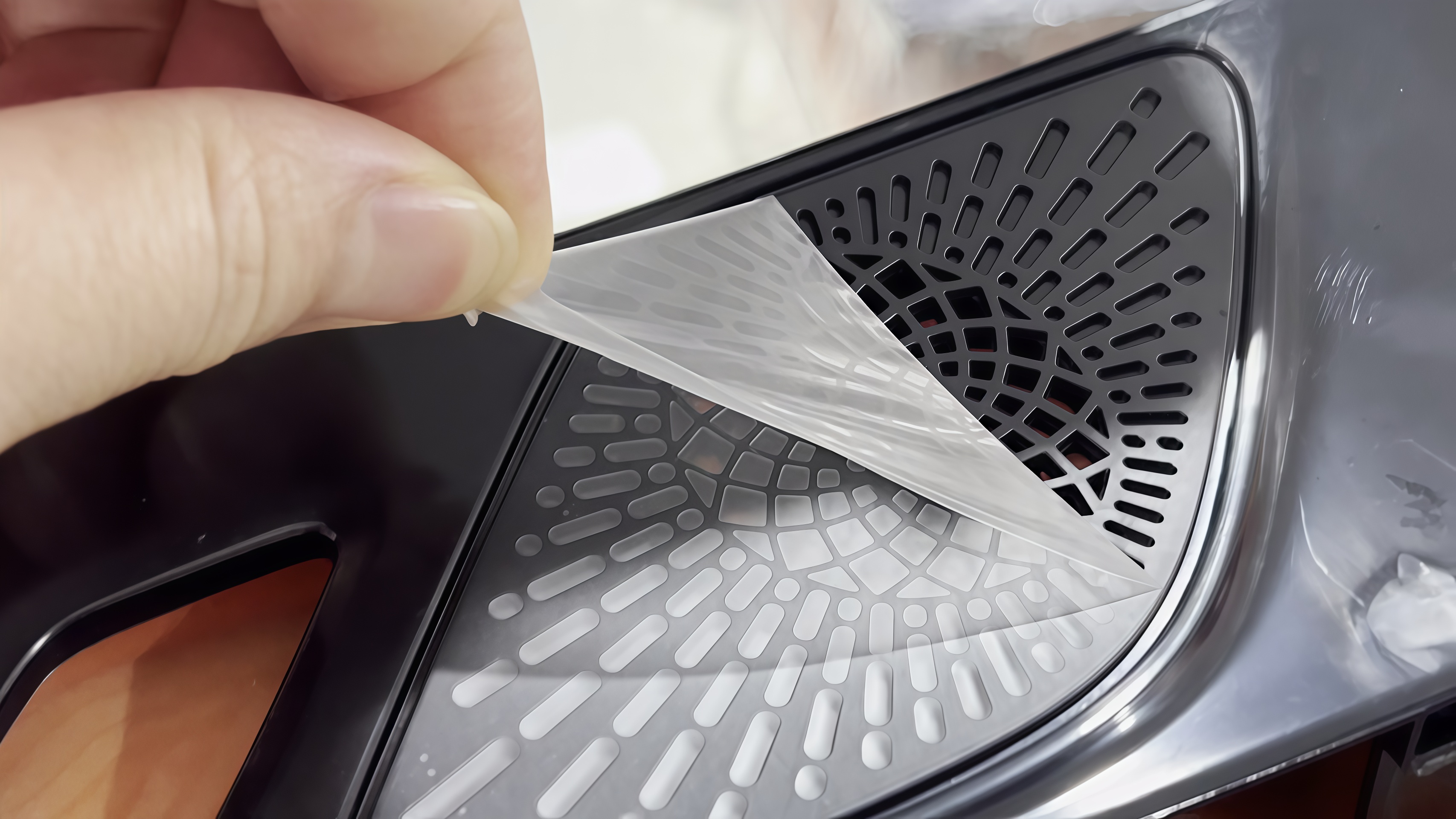
● The surface is glossy. Piano black and bright trim show every bubble, dust point and edge step. The standard is cosmetic, so a defect that would pass on a functional part fails here.
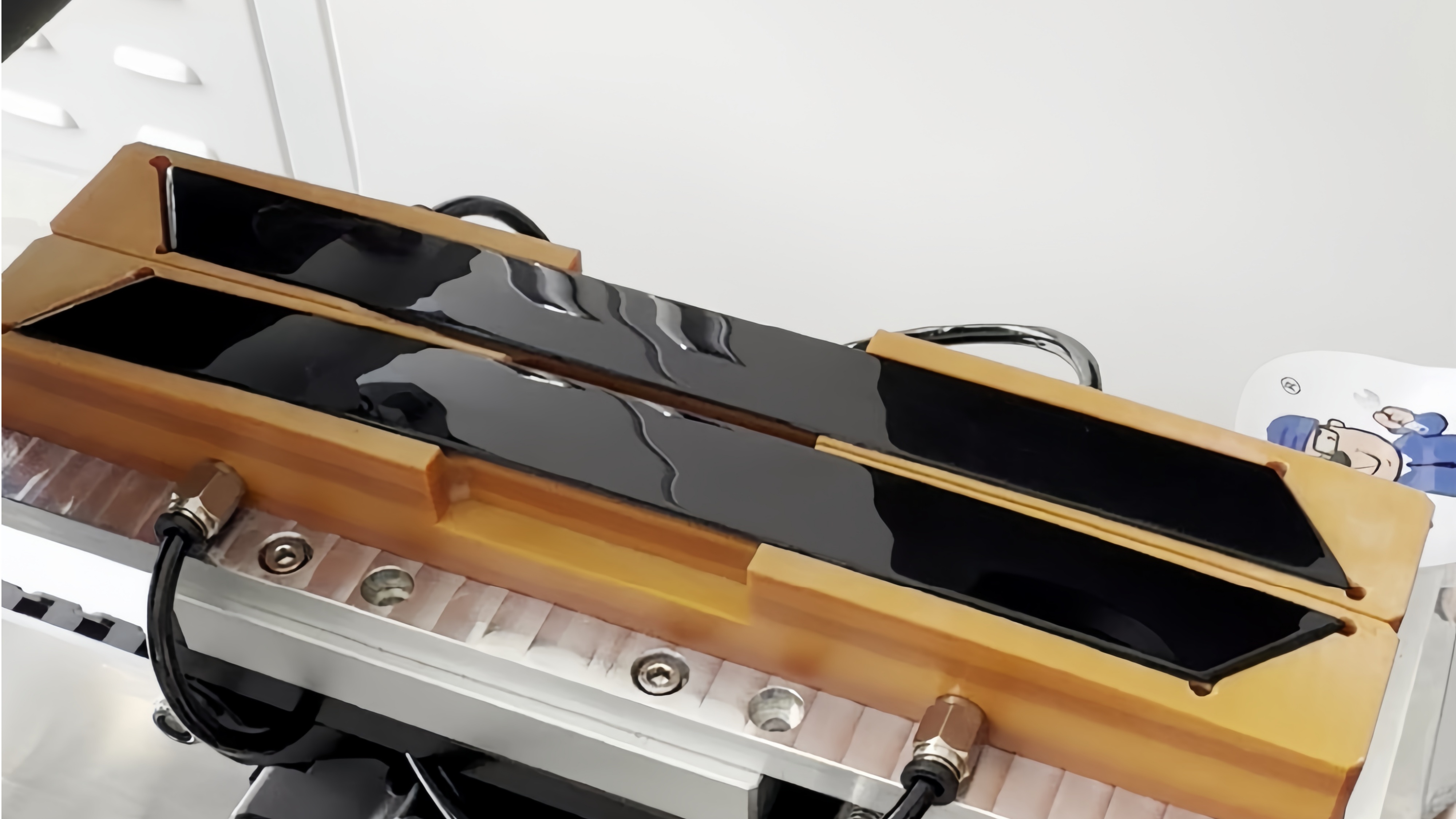
● The geometry moves in two directions. A B-pillar cover carries a crown along its length and a height drop at the ends. A flat head contacts the high point first and bridges the rest.
● The parts come in pairs. Left and right ship in the same box and are read together at assembly. A mismatch between the two is a rejection even when both sit inside tolerance.
● The volume is a takt. A trim cell feeding assembly has to hold output every hour, not on average across the month.
A general-purpose machine can be programmed to touch these parts. Holding the cosmetic standard at takt is the harder requirement, and that is where the five checks come from.
The Five Checks That Decide It
A press head pushes film down as one plane. On a curved cover it touches the crown first and traps air where the surface falls away, and pressure cannot remove it.
A roll head lays the film progressively from one edge, so the adhesive wets out as the roller travels and air is pushed ahead of the contact line rather than sealed under it.
How to check it: run one curved part and count bubbles along the roller path under raking light. Ask for the roller diameter and whether it was chosen for your part arc.
2. The head follows part height without a screw
Trim families change height between part numbers. A shallow quarter window trim and a deep console panel share a cell only if the head adjusts quickly and repeatably.
On many machines it is a manual screw, and the turns are recorded nowhere, so the setting drifts with the operator.
How to check it: watch a changeover between two of your part numbers. Time it, count the tools, and ask whether the height is a program value or a mechanical setting.
3. A pair is applied as a pair
Twin heads on twin Y axes can work a left and a right part in one continuous sequence, or apply them together as a matched set. One cycle, one pair, one inspection.
The benefit goes past speed. Applying the pair removes a handling step and the contamination risk that comes with it, and on piano black trim that step is where dust lands.
How to check it: ask whether the quoted cycle time is for a part or for a pair, and whether the second head is standard or an option.
4. The film range covers your actual deck
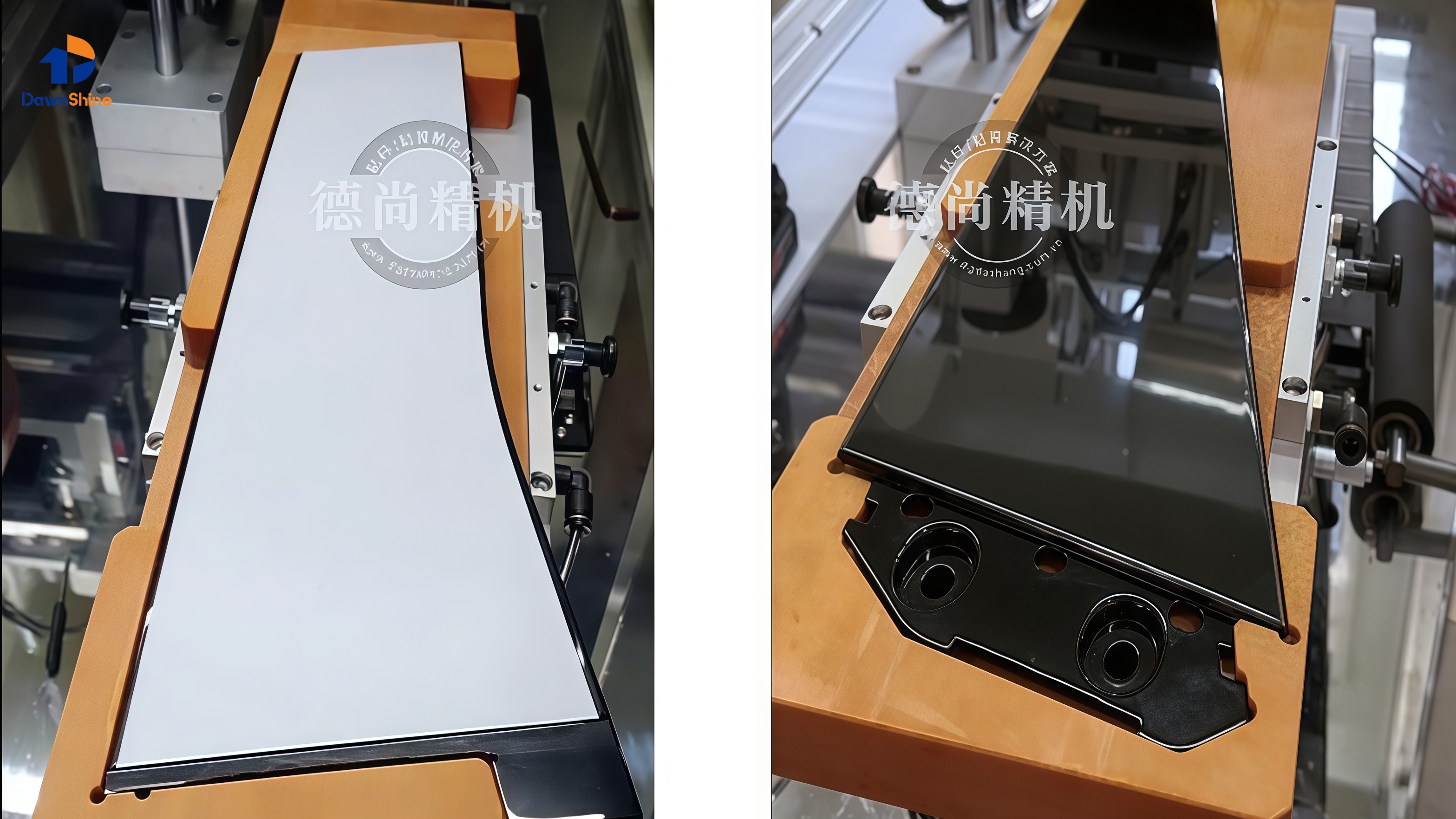
Trim projects use clear film on glossy surfaces and white film for contrast or hidden edges, in materials from PE and PVC to PET and OPP. A machine quoted for one film type is a machine for one project.
How to check it: read the range as two numbers, film length and carrier width, then send the rolls you will actually run, clear and white both.
5. Output is stated with its conditions
A single unqualified output figure causes most post-delivery arguments, because nobody can reproduce it with the crew on the floor.
How to check it: ask what the figure assumes about operator skill, film change interval and part mix, then run one hour at your takt with your own operator.
Where DawnShine Answers All Five
DawnShine has built film application equipment for 15 years, holds more than 50 patents and works to ISO 9001. Its build shop runs its own CNC machining, so fixtures and custom heads are made in house, which is what lets one platform cover a trim family instead of a single part number.
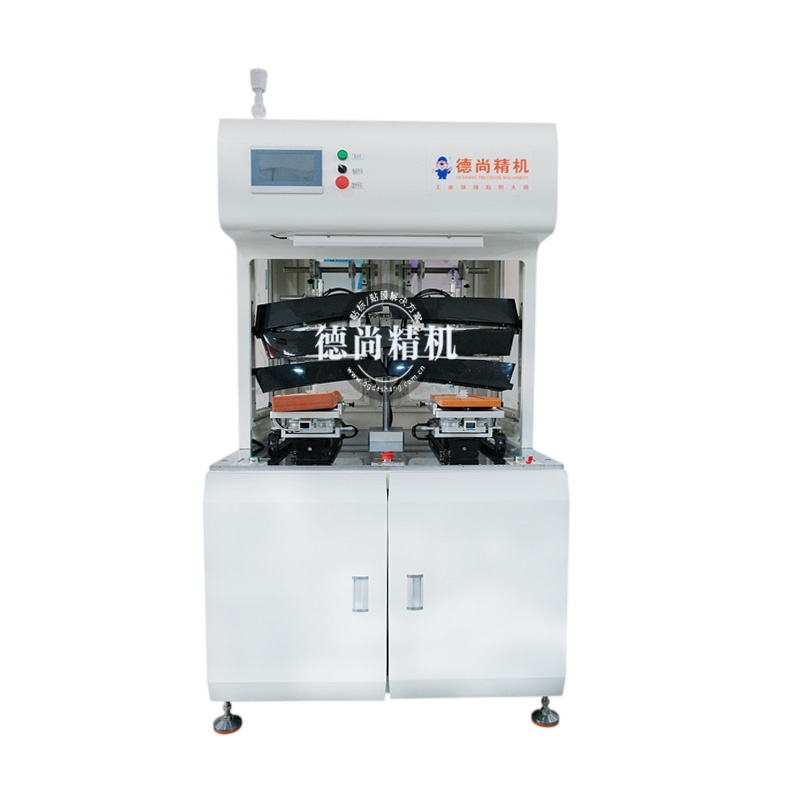
The automotive series is built around these parts: A, B, C and D pillar covers, trim strips, mirror housings, door sills and console trim, in clear or white protective film. For B-pillar work the machine we quote is the DS-363 Automotive B-pillar Trim Laminating Machine , a floor-standing automotive trim film laminating machine with twin heads on twin Y axes.
Specification lines as published for the standard DS-363. Custom heads and fixtures are quoted from the part and the film.
What the DS-363 Changes on Your Line
The value of the machine sits in the four things that stop happening once the process is stable.
● Cosmetic rejects stop arriving from the customer. Roll application and automatic height following remove the two bubble causes on curved covers, and a fixture-held datum removes the edge offset that reads as a mismatch on a handed pair.
● Changeover stops being a skill. Height is a program value and matched parts run together, so a new part number is a stored program and a fixture swap, not a re-setup by your best operator.
● Handling steps come out of the route. Applying left and right as one set removes a pick-and-place between the two parts. On piano black trim, every removed touch removes a scratch risk and a dust source.
● Fool-proofing is built in. The DS-363 carries bin detection, mistake-proofing protection and an operator error guard, which matter more on a cell running three shifts than any speed figure.
Cost per accepted part at your takt is the honest comparison, with your rework rate included. A machine that needs a senior operator to hold the standard is not cheaper when that operator is on leave.
One Machine, One Tooling Set
A trim plant usually runs several part numbers on one line: B and C pillar covers for two programs, a trim strip, a mirror housing pair. The DS-363 Automotive B-pillar Trim Laminating Machine covers that family with a fixture and a program per number, because the film range and the height adaptation absorb the differences.
Two limits before you specify. Vision is not part of this machine, so the fixture carries the datum. And VHB, foam and clip assembly are different heads, quoted separately on the same platform family.
Standard DS-363 Specification
|
Parameter
|
Value
|
|
Application method
|
Roll application, twin heads on twin Y axes, continuous or alternating
|
|
Film size
|
Length 20 to 550 mm, carrier width 20 to 220 mm
|
|
Placement accuracy
|
±0.5 mm on flat parts, ±1 mm on custom-shaped parts
|
|
Output
|
300 to 500 pairs per hour, depending on operator skill
|
|
Film types
|
PE, PVC, PET, OPP, UV, FPC, PO, adhesive labels
|
|
Power / air
|
220 V 50 Hz, 1.5 kW, 0.4 to 0.6 MPa
|
|
Machine size / weight
|
1300 x 1000 x 1950 mm, about 300 kg
|
|
Safety and control
|
Bin detection, mistake-proofing, operator error guard, semi-enclosed frame
|
Standard model. Special requirements and functions are built to the part, which is why the sample stage matters more than the brochure.
Send One B-Pillar Cover
The fastest way to test all five checks at once is a part. Send one B-pillar cover from production, the film you will run, and your target takt. We will run it on a DS-363 and report the measured edge offset, the bubble count under raking light and the cycle time for a pair.
Contact DawnShine to arrange a sample trial or request a quotation for your pillar trim part.
About DawnShine
DawnShine (Dongguan DawnShine Precision Machinery Co., Ltd.) builds film application and lamination equipment for automotive trim, plastic components and electronics housings in Dongguan, China. Machine selection follows the part, the film and the standard.
Frequently Asked Questions
Can one DS-363 run both left and right covers and a second part number?
Yes, within the film range of 20 to 550 mm length and 20 to 220 mm carrier width. Each part number needs its own fixture and program, and the head follows height automatically above a 70 mm drop.
How is 300 to 500 pairs per hour measured?
It is machine output for a pair with one operator loading and unloading, and it varies with skill. Your rate also depends on film change intervals and the inspection between pairs, so run one hour at your takt before accepting the figure.
Do we need a second machine for a different trim part?
Usually not. The constraint is film size and fixture, not machine count. A new part number means a new fixture, a new program and, where geometry demands it, a custom head.
Can the same machine apply VHB tape or foam?
Different heads and material paths, so treat them as a separate quotation on the same platform family. If your program includes tape or foam, send those samples with the film trial.



.jpg)
.jpg?imageView2/1/w/64/h/64/format/webp)